
01
A shape that makes no apology
Where most modern SUVs slope their roofline for looks, the GLB keeps it square. That is why an adult can sit in the back row without their head touching the lining, and it is why the car looks like a small van from some angles and a proper SUV from others.
It also means more frontal area and more weight than a GLA, and both of those make the engine's job harder at speed. Owners moving from a smaller car often notice that the GLB feels heavier on a long climb than they expected, and that is the honest starting point for a conversation about calibration.
02
Petrol and diesel, and which is which
The GLB has carried petrol and diesel engines under the same badges over its life, so the number on the tailgate is not enough to go on. The 200 and the 220 have both been offered with more than one engine, and the 250 sits at the top of the standard range. Two cars with the same badge can differ underneath.
That is settled from the registration before anything is quoted. The file for a diesel is built around different priorities to the file for a petrol, and the gearbox and drivetrain add another variable on top.
Traction varies too, since some versions drive the front wheels alone while others put power down at both ends. The way the lower gears are handled in the calibration depends on that, particularly on a car this heavy with a full load on board.
03
Tuning for a loaded car
The most useful change on a GLB is in the middle of the range, at the speeds where a family car actually works. A steeper hill with five people and luggage stops being a gear hunting exercise. An overtake on the A20 becomes one movement rather than two.
Owners who tow will get more from the file again, because load is where the standard calibration feels most conservative. Tell us if you tow a caravan or a trailer, since that shapes the delivery we write.
What the tune will not do is make a tall, heavy, boxy car feel like a saloon. Anybody promising that has not driven one.
04
Diesel notes and the emissions systems
Most high mileage GLBs here are diesels, and the pattern of use matters. School runs around Strood all week fill the filter with soot and coat the EGR valve, and neither of those faults belongs to the software.
We assess both before tuning, with live data rather than assumption. If the filter is loaded or the EGR is coked, we say so, and the tune waits until the car is healthy. For the detail on what those systems require, see DPF solutions and EGR solutions.
A GLB that spends an hour on the motorway twice a week is in a completely different position, and most of these cars do exactly that.
05
The inspection, and where the work happens
Fault memory across every module comes first, including the gearbox and the body systems, because a seat or a door module code can be the real explanation for something the owner has blamed on the engine.
Live readings come next, with the engine idling and then under load: mass air flow, requested against delivered boost, short and long term fuel trims, plus the emissions readings a diesel provides. Coolant and oil get a look, as does the condition of the tyres, because a seven seat car with a full complement of passengers needs grip more than it needs response.
Then the conversation about what you want, and the file is written after that. Our diagnostic health checks page explains the process in more depth.
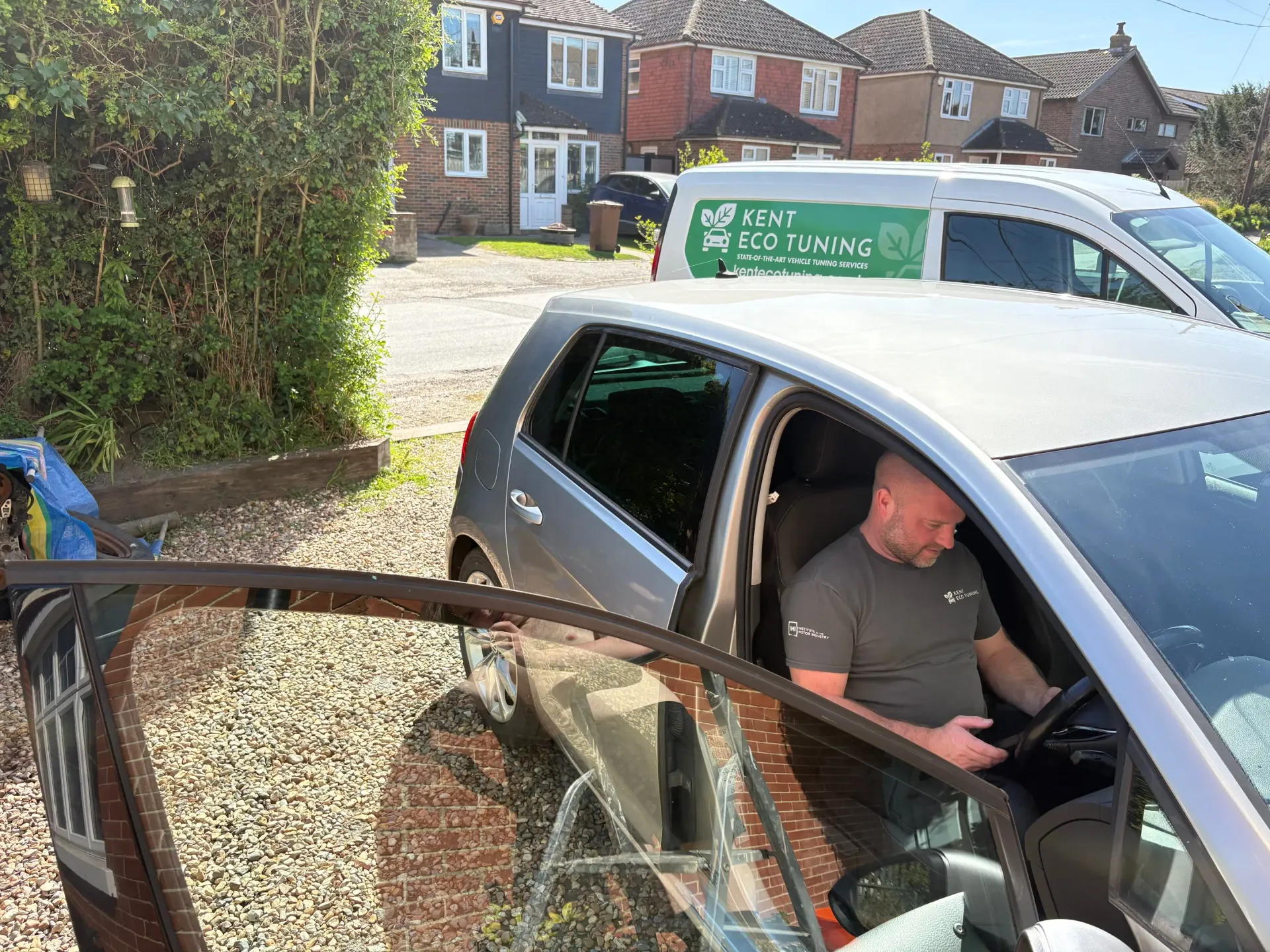
The work happens at your address anywhere across Medway, the rest of Kent or into Essex, so plan for a morning or an afternoon and a space to park. Nothing needs arranging beyond that, because there is no workshop and nothing to drop off, and the road test afterwards is part of the job rather than an afterthought.
If the car already carries a calibration from elsewhere, it gets read first. A weak previous file is a reason to start again rather than to layer something over the top of it. Automatic gearbox behaviour after tuning is worth discussing in advance, and our gearbox tuning page covers where that can go.
06
Ask before you book
Call 07946 854971 during the day, or leave the registration on the contact form and mention how often the car carries seven. Marque coverage is at Mercedes remapping Kent, the hatchback sharing much of the same hardware sits at A-Class tuning, and the sharper against easier question is answered at power versus economy.
07
GLB tuning questions
08
Can the seven seat version be tuned?
Yes. The extra weight is exactly why it benefits, and load is the main thing we tune around.
09
Are the 200, 220 and 250 all covered?
They are, in petrol and diesel form, once the registration confirms the engine and drivetrain.
10
Does a tune help with towing?
It can, because the middle of the range is where a loaded car struggles. Tell us what you tow.
11
Will economy improve?
It may do on a steady run, depending on how you drive. We do not publish figures, because they vary by car and by route.
12
Related models
Owners often compare this with Mercedes-Benz A35, Mercedes-Benz A45 and Mercedes-AMG GT, and each has its own page covering the engines and what the calibration changes.