
01
What a Stage 1 Remap Changes in the ECU
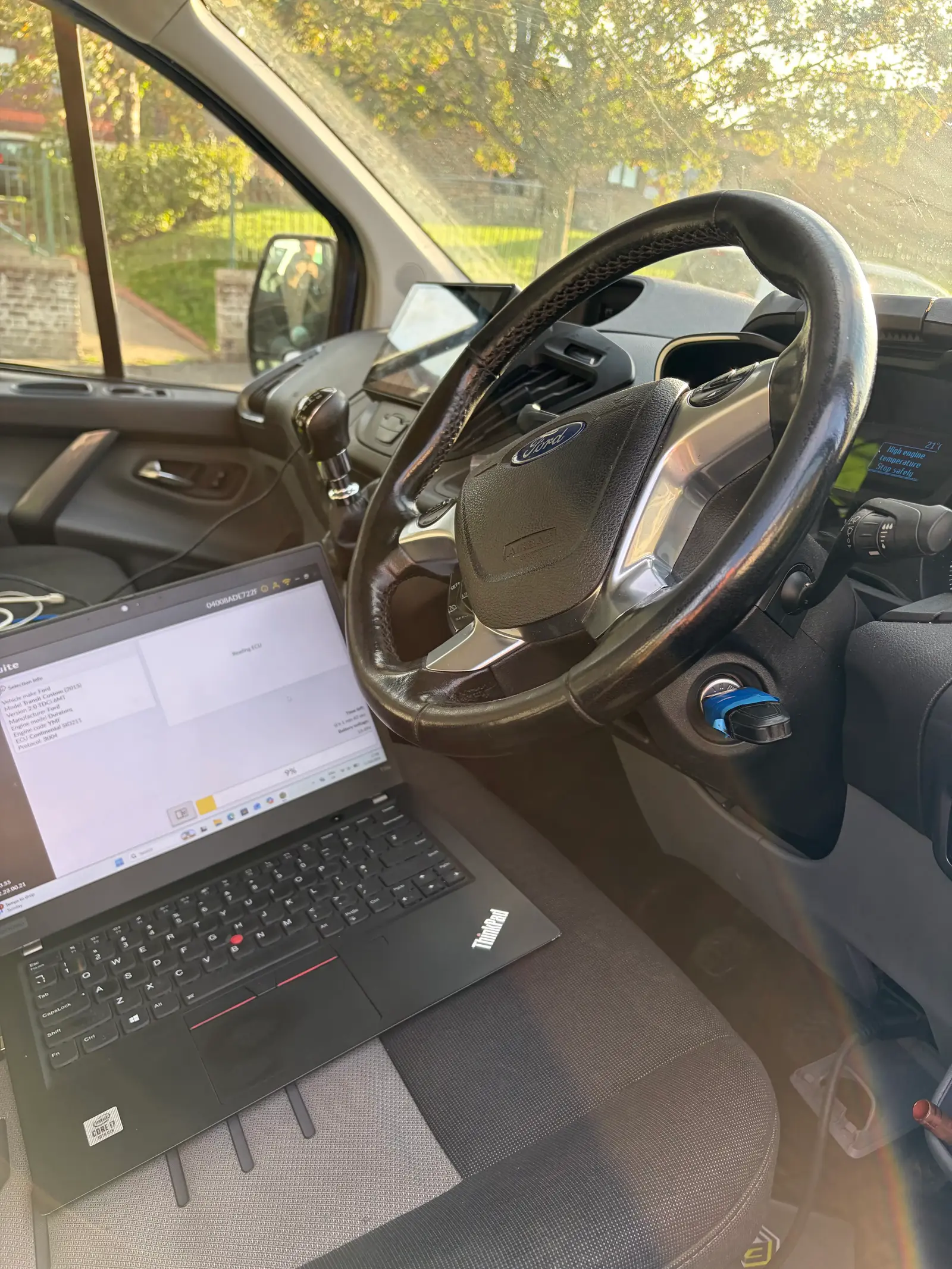
So, what is a stage 1 remap? It is a software calibration for the engine control unit (ECU), tailored to adjust how the engine responds within the limits of its existing hardware.
On a turbocharged vehicle, the calibration may adjust how the ECU manages boost, fuelling and torque requests. Depending on the engine and its control system, it may also refine ignition timing or throttle strategy. These settings work together: the accelerator pedal requests a response, and the ECU decides how the engine should deliver it while monitoring operating conditions and protective limits.
"Stage 1" is a widely used industry term, not a universal technical specification. The exact changes can vary between vehicles and tuning providers. A responsible approach is to assess the specific car and its intended use, rather than assume one standard file will suit every model.
A Stage 1 remap is generally a software-only change. It does not normally require replacement parts or bolt-on modifications, provided the vehicle and the chosen calibration are suitable. It does not change the engine's basic mechanical design.
02
More Mid-Range Torque for Everyday Driving
One of the benefits drivers often notice is stronger, more accessible torque through the useful mid-range. In practical terms, this can make a car feel less hesitant when pulling away, climbing a hill or gathering speed to join faster-moving traffic.
The aim is not necessarily to make the vehicle feel aggressive. A carefully developed tune can deliver power more progressively, so acceleration feels smoother and the engine responds more willingly when asked to work.
The change is most relevant to normal journeys, where drivers often want confident response without having to press the accelerator as far or select a lower gear as frequently. Actual results vary by engine, gearbox, mileage and vehicle condition. Figures should be treated as estimates for a healthy vehicle, not guaranteed outcomes.
03
Sharper Throttle Response Without the Hype
Throttle response describes how the vehicle reacts when the driver presses the accelerator. A remap can alter the relationship between pedal input and the ECU's torque request, which may make the car feel more responsive.
That does not mean the engine produces maximum power every time the pedal moves. Modern engine management coordinates airflow, fuelling, temperature protection and other control systems. A well-considered calibration needs to work with those controls, not simply raise requests indiscriminately.
The perceived difference also depends on the vehicle. Some drivers may notice a more immediate response; others may mainly feel a stronger pull once the turbo is producing boost. No calibration can remove every characteristic of an engine or compensate for a mechanical fault.
04
Economy Potential Depends on Driving Style
An economy-focused calibration and a power-focused calibration have different priorities. A power-oriented remap emphasises stronger acceleration and response. An economy-focused tune aims to make useful torque available in normal driving, potentially helping the driver maintain speed with less throttle input or use a higher gear sooner.
For a private driver, that may mean a more relaxed-feeling commute. For a tradesperson, improved low-speed pulling response can be useful when driving a loaded van or travelling between jobs. Fleet operators may also want to discuss how vehicle use, routes and load affect the choice of calibration.
Better fuel economy is a possibility, not a promise. Driving style, traffic, journey length, payload, vehicle maintenance and fuel quality all affect consumption. Using extra performance frequently can offset any potential efficiency benefit. For a clearer comparison of calibration priorities, read our guide to power versus economy for a Stage 1 remap.
05
What a Stage 1 Remap Does Not Change
A software calibration does not repair worn components, improve neglected servicing or make an unsuitable vehicle healthy. It is not a substitute for mechanical maintenance, and it cannot correct a failing turbo, slipping clutch, boost leak, faulty sensor or unresolved engine warning.
Nor does a typical Stage 1 remap require hardware upgrades. If a vehicle needs hardware changes to meet a particular performance goal, that is a different scope of work and should be explained clearly before any work is agreed.
The calibration should also retain appropriate engine protections and emissions-system operation. A remap should not be used to hide a fault or defeat emissions equipment. A physically blocked DPF requires repair rather than a software change, and removing or defeating emissions equipment can cause an MOT failure.
06
Health Checks First: Reduce the Risk of Bigger Problems
Applying a more demanding calibration to a vehicle with an existing fault can expose weaknesses or make symptoms worse. A worn clutch, cooling issue, boost leak or engine fault may become more noticeable under increased load. Ignoring those problems can lead to expensive damage and, where a vehicle is not operating safely, a safety risk.
Systems therefore need to be maintained properly. Before discussing a remap, a vehicle should be checked for stored faults and signs of poor running. Depending on the car, this may include reviewing live engine data, boost behaviour, temperatures, service condition and emissions-system status. The clutch, gearbox and other drivetrain components also matter because they must handle the vehicle's operating load.
If a fault is found, the sensible next step is diagnosis and repair, not tuning around the symptom. Our diagnostics and vehicle health checks provide a starting point for identifying issues before a calibration is considered.
07
Is a Stage 1 Remap Right for Your Car?
A Stage 1 remap may suit a driver who wants a more responsive daily car, a more usable spread of torque, or a van that feels better matched to regular work. It may be less suitable if the vehicle has unresolved faults, a questionable service history, a drivetrain already showing wear, or a use case that demands a different calibration priority. Before proceeding, discuss how the vehicle is driven, what improvement matters most and whether the car is in suitable condition. Ask what the calibration changes, what fuel it requires and how the vehicle's protective and emissions functions are treated. Insurance requirements can vary, so drivers should check with their insurer about declaring modifications. At Kent Eco Tuning, our approach is based on vehicle-specific advice and proven gains, not unrealistic numbers. Learn more about our ECU remapping service in Kent, including how we tailor a calibration to the vehicle and driver. Owners of a Mazda can read the Mazda remapping page for make-specific notes. Owners of a Jeep can read the Jeep remapping page for make-specific notes.
08
Make an Informed Decision
The main Stage 1 remap benefits are potential improvements in torque delivery, throttle response and everyday drivability, with economy potential when the vehicle is driven sensibly. The changes are made through ECU software; they do not transform the car's mechanical condition or guarantee a particular result.
A health check, an honest discussion about the vehicle's use and a suitable calibration are essential. To ask whether a remap is appropriate for your car or van, visit the Kent Eco Tuning contact page or call 07946 854971. Find out more at www.kentecotuning.co.uk.
For Volvo vehicles, see the Volvo remapping page.
For Honda vehicles, see the Honda remapping page.
For Skoda models, see the Skoda remapping page.