
01
Why working vans can develop DPF problems sooner
A diesel particulate filter, or DPF, captures soot from the exhaust. The vehicle periodically raises exhaust temperature so accumulated soot can burn away in a process called regeneration. This works best when the van is hot and running under suitable conditions for long enough.
Many working vans do the opposite. A typical day may involve short trips between jobs, cold starts, stop-start traffic, reversing on site, long periods parked with the engine running and frequent interruptions. If an active regeneration begins but the engine is switched off before it completes, the soot may remain in the filter. Repeated interruptions can contribute to a rising soot load.
The van may also be carrying tools, materials or stock. The extra weight means the engine often works harder, particularly when accelerating or climbing hills. That load is part of the job, but combined with low-speed driving and idling, it can make the vehicle's working pattern demanding for its after-treatment systems.
A DPF warning should not be ignored. As soot loading rises, the vehicle may attempt more frequent regeneration, use more fuel or limit engine performance. If the problem continues, the van may enter limp mode, and a filter that needs attention can become a more serious repair.
02
DPF regeneration: follow the handbook
Regeneration behaviour and driver instructions vary between vehicles. If a DPF warning appears, check the owner's handbook and follow the manufacturer's guidance. Where the vehicle requests a drive to support regeneration, only do so when it is safe, legal and appropriate for the warning shown.
Do not assume that every warning means the van needs a regeneration, or that a long drive will fix it. A persistent warning can have other causes, including a faulty pressure or temperature sensor, a problem with the EGR system, a fuelling issue or a fault that prevents regeneration from completing. Repeatedly trying to force a regeneration without checking the cause can waste time and may create further problems.
The soot is not the whole story, either. Ash accumulates over the life of a filter and does not burn away during regeneration. Systems therefore need to be maintained properly, with the correct servicing and oil specification for the vehicle.
For practical guidance on how driving patterns affect filter health, read our guide to DPF blocking on short trips.
03
AdBlue is separate from the DPF
AdBlue is used by the selective catalytic reduction system, often called SCR, to reduce nitrogen oxide emissions in the exhaust. It is not a DPF cleaner and does not perform the DPF's regeneration process. A van can therefore have an AdBlue warning, a DPF warning, or separate faults affecting both systems.
An AdBlue warning may relate to low fluid, but it can also point to a fault with components such as the tank, pump, heater, injector, wiring or NOx sensors. Some vehicles display a countdown or restrict starting if a fault remains unresolved. Topping up the fluid will not repair a failed component or clear every system fault.
Use only the AdBlue specified for the vehicle and put it in the correct filler. AdBlue must never be poured into the diesel tank. If a warning remains after a correct top-up, or a countdown appears, arrange diagnosis promptly and follow the vehicle manufacturer's instructions.
Our AdBlue solutions in Kent begin with finding the cause of the warning. A hardware fault needs an appropriate repair; software changes are not a substitute for repairing a failed system on a road vehicle.
04
DPF software solutions Kent: diagnose before deciding
The phrase "DPF software solutions" can sound like a quick answer to a blocked filter. It is not. Software cannot remove physical soot or ash from a DPF, repair a damaged filter, or correct a faulty sensor or engine component.
A physically blocked DPF requires repair instead of software changes. Depending on the condition and the cause, a suitable repair may involve professional cleaning, component repair or filter replacement. A diagnostic check should also look for the reason it blocked, otherwise the replacement or cleaned filter may be put at risk again.
Removing or defeating emissions equipment is not a lawful repair for a road-going van. Removing or defeating emissions equipment can cause an MOT failure. The MOT inspection guidance covers missing or obviously modified emissions-control equipment, including a DPF fitted as original equipment. See the GOV.UK MOT inspection manual and the GOV.UK DPF guidance for official information.
05
Van remap: tune for the work, not the warning light
A van remap is not a fix for a blocked DPF or an AdBlue fault. Those problems need proper diagnosis and repair first. Once a vehicle has passed a health check, a carefully developed tune may be considered to suit how the van is used.
For a working vehicle, the priority may be smoother throttle response and useful torque delivery when carrying tools or materials. An economy-focused tune is different from a power-focused calibration: its aim is to support efficient driving, while a performance brief prioritises stronger response. The right approach depends on the van's condition, intended use and the driver's goals. Fuel use will also depend on routes, load, traffic and driving style, so no software change can guarantee a particular saving.
Our van and fleet remapping service is tailored to the vehicle and its use. For wider practical advice on reducing running costs, see how to improve van fuel costs. Any calibration must be appropriate for the vehicle and must not disable or defeat its emissions controls. Drivers should also check their insurance requirements and notify their insurer of modifications.
06
Protect uptime with early checks
A few consistent habits can help a van's emissions systems do their job:
- Follow the vehicle handbook's instructions for DPF regeneration. - Avoid unnecessary idling where practical, and do not interrupt a regeneration if the manufacturer advises that it is in progress. - Keep servicing up to date and use the specified oil and AdBlue. - Record warning messages and recurring symptoms across fleet vehicles. - Arrange a diagnostic check when warnings persist, performance changes or regeneration appears unusually frequent.
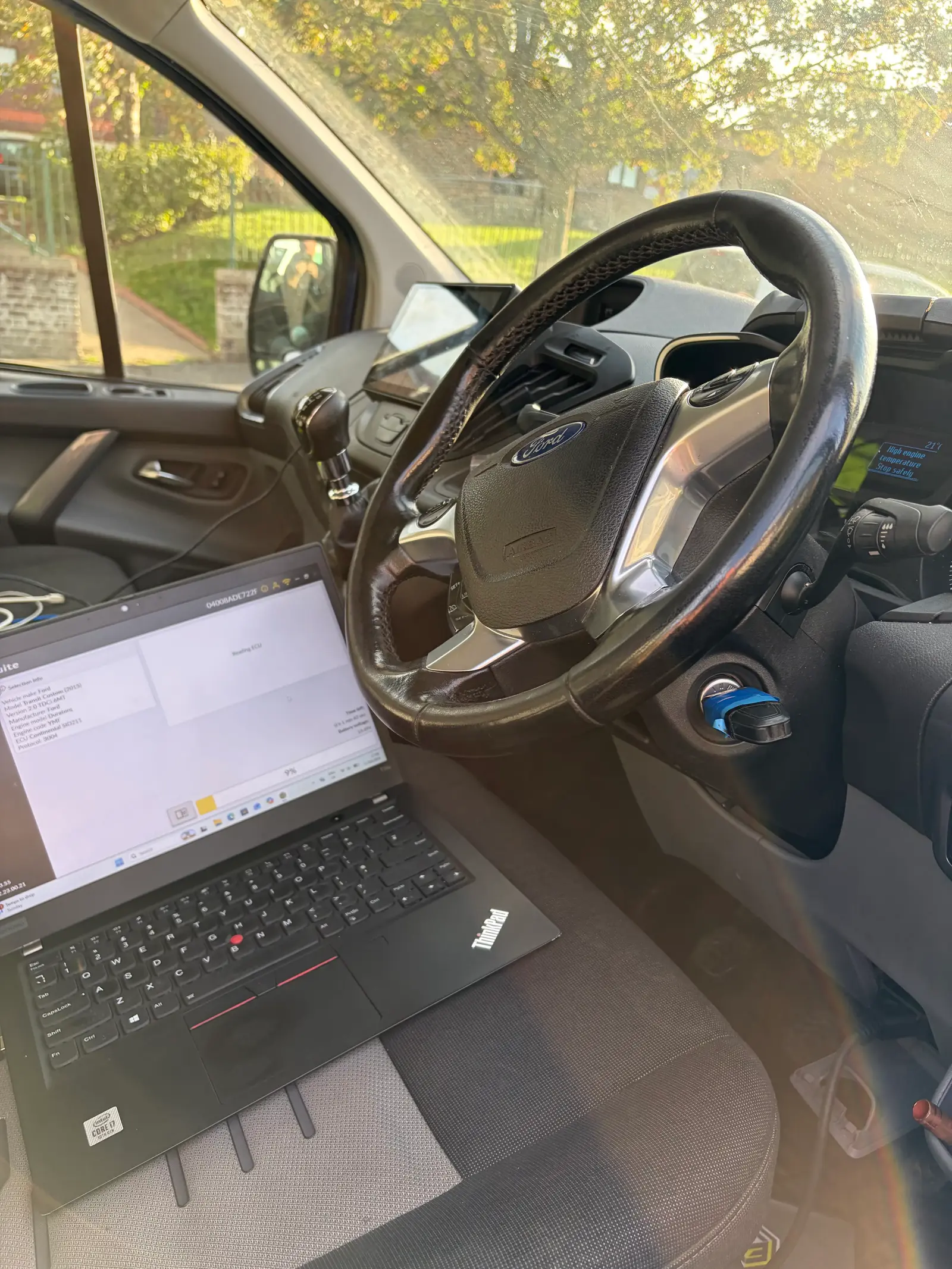
A diagnostic assessment can examine fault codes alongside relevant live data and usage history. This helps distinguish a regeneration issue from a sensor, engine or SCR fault, and gives the owner a clearer basis for deciding what repair is needed.
07
Get clear advice for your van
For tradespeople, downtime affects more than the vehicle: it can disrupt jobs and schedules. Acting early gives a specialist the opportunity to identify the fault before it develops into a more costly problem.
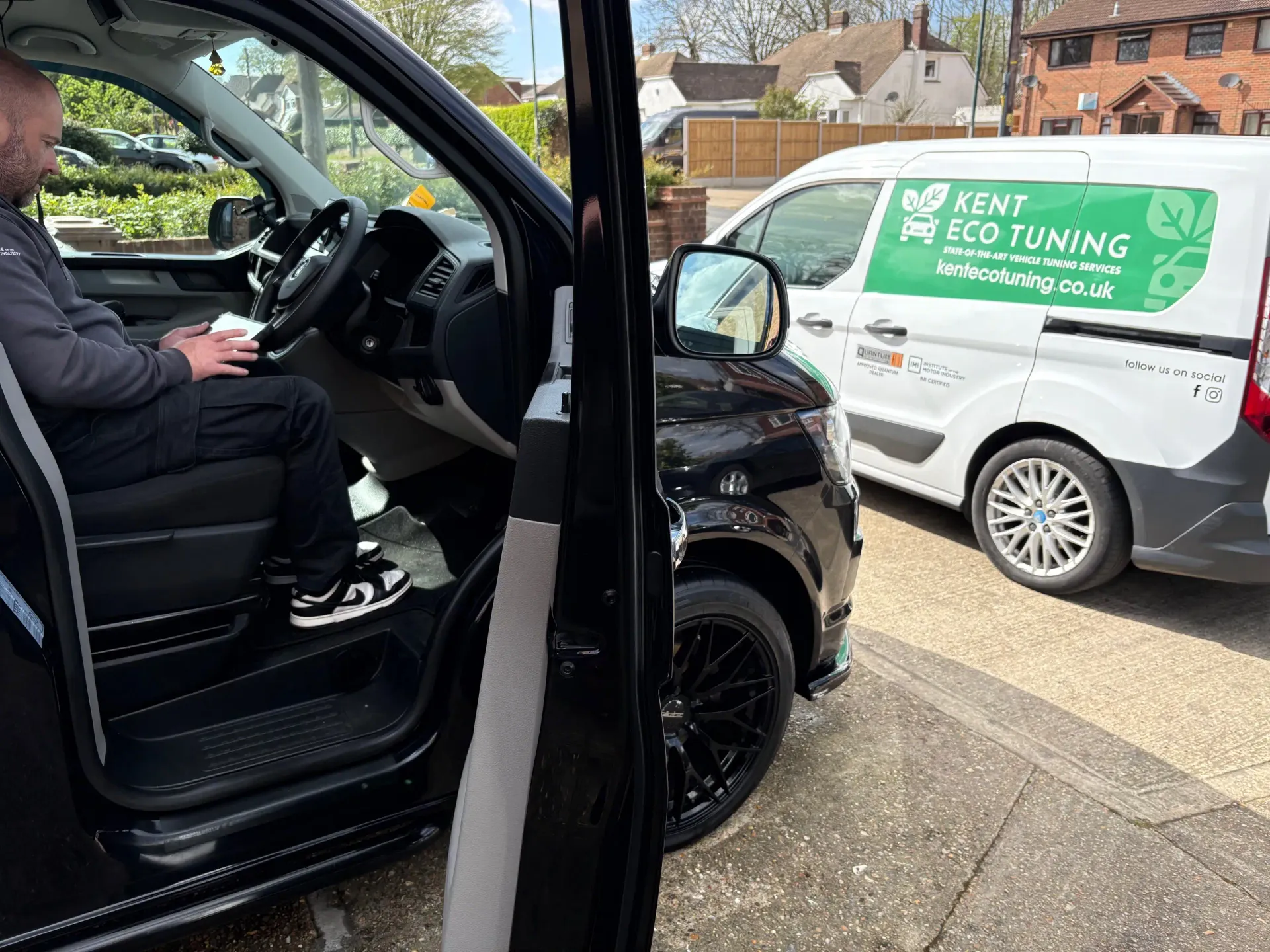
Kent Eco Tuning provides mobile diagnostics and vehicle software services across Medway and Kent. We assess the vehicle first, explain what the findings mean and recommend a suitable next step. To discuss a van or fleet, visit our contact page or call 07946 854971.
08
MG Remapping FAQs
09
Is AdBlue the same as DPF fluid?
No. AdBlue is used by the SCR system to reduce nitrogen oxides; the DPF captures soot. A van can have a fault in either system independently.
10
Can I top up AdBlue and ignore the warning?
If the warning is low-fluid, a correct top-up may resolve it. If it persists, the cause is a component fault - diagnosis identifies which.
11
Will a remap remove my DPF or AdBlue system?
No. We never remove or defeat emissions equipment on road vehicles; removing them causes MOT failure.