

01
The Science of the "Safety Margin"
Every modern vehicle is controlled by an Engine Control Unit (ECU). This is essentially the "brain" of the car, managing parameters such as fuel injection timing, boost pressure from the turbo, and ignition timing. When a manufacturer releases a vehicle, they do not tune it to its absolute mechanical limit. Instead, they apply a "one-size-fits-all" software map.
Manufacturers build in a significant "safety margin" for several reasons:
When we perform car tuning kent motorists trust, we are essentially tapping into this unused headroom. By refining the software to suit the high-quality fuels and temperate climate found in the UK, we can provide a significant increase in power and torque without exceeding the mechanical capabilities of the engine components.
- Variable Fuel Quality: The car must be able to run safely on low-grade fuel in different global markets.
- Extreme Climates: The engine must survive both Arctic winters and Saharan heatwaves.
- Neglected Maintenance: They account for owners who skip service intervals or use sub-par oil.
02
The Danger of "Cheap" Remaps: Problem, Consequence, and Solution
The remapping industry is unfortunately unregulated, which has led to a rise in "laptop tuners" offering generic, low-cost files. This is where the safety concerns regarding remapping usually originate.
03
How to Tell a Safe Remap From a Risky One
A safe calibration starts with diagnostics before any file is written, keeps the factory safety strategies intact, and comes with a written explanation of what changed. A risky one arrives as a generic file bought from a forum, applied over unresolved fault codes, with no health check and no questions asked about how you use the vehicle.
The questions to ask any tuner are simple: do you read live data first, do you keep the safety strategies, and what happens if the calibration is not right for my car? The answers tell you more than the price does.
04
The Problem: Generic Files
Low-cost tuners often use "off-the-shelf" files that have not been tested on your specific vehicle. These maps often simply "cheat" the sensors, forcing the engine to provide more power by bypassing safety protocols. They might request 30% more boost pressure across the entire RPM range, regardless of engine load or temperature.
05
The Consequence: Catastrophic Component Failure
If an ECU map is too aggressive or poorly calibrated, the consequences are severe:
- Turbocharger Failure: Over-boosting can lead to the turbo over-spinning, eventually causing the bearings to fail or the blades to shatter.
- Clutch and Gearbox Wear: Excessive torque spikes can cause the clutch to slip and prematurely wear out the transmission.
- Engine Knock: Incorrect ignition timing can cause "pre-detonation" or knock, which can melt pistons and destroy an engine in seconds.
- DPF Clogging: Poorly tuned diesel engines produce excessive soot, leading to expensive DPF issues.
06
The Solution: Custom Calibration and Diagnostics
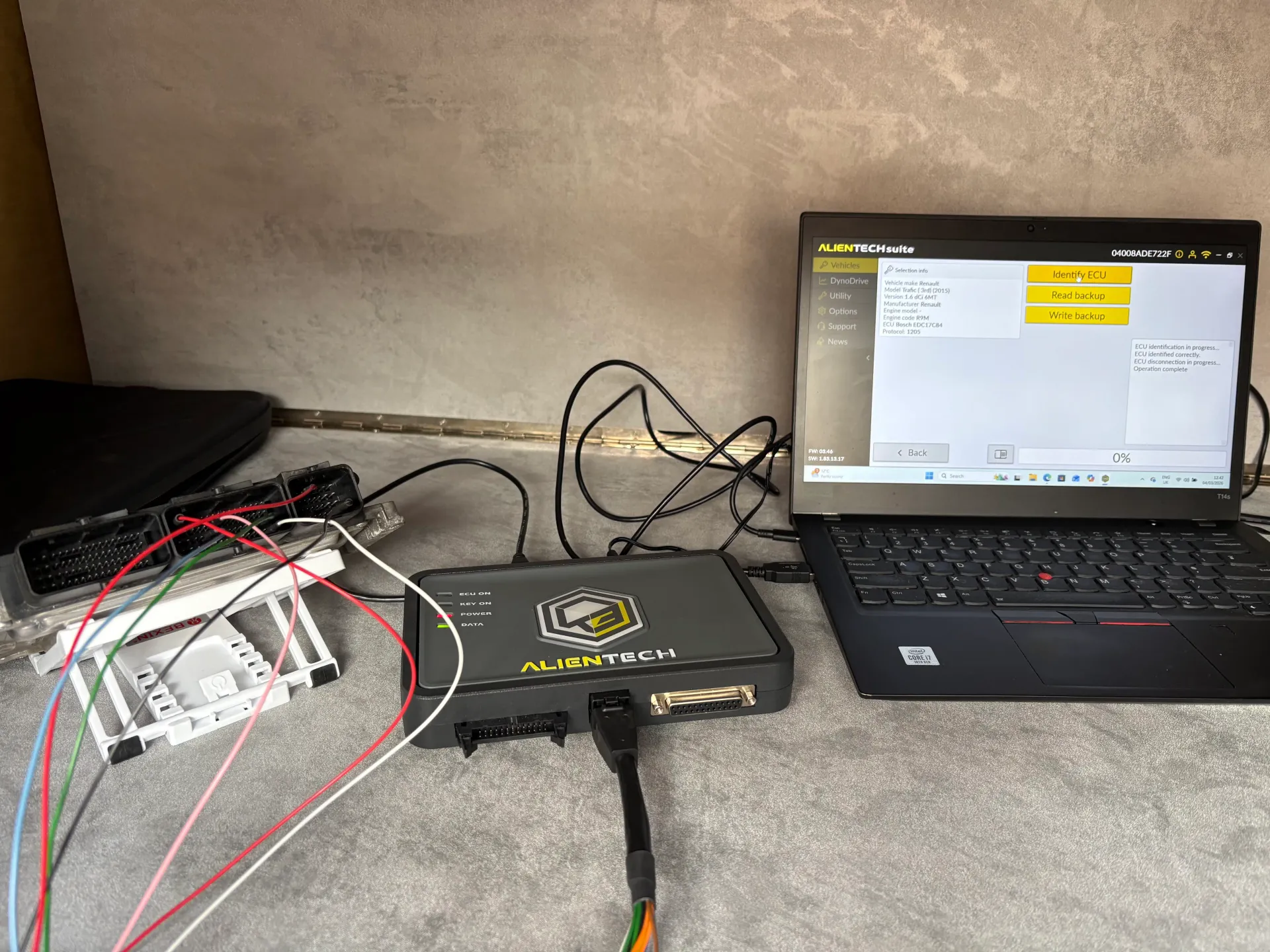
The remedy is simple: Do not compromise on quality. A professional specialist like Kent Eco Tuning uses dealer-level tools, such as the Alientech KESS3, to perform a full health check before a single line of code is changed. We ensure your engine is healthy enough to handle a map, and we use tailored software that respects the specific torque limits of your gearbox and the thermal limits of your turbo. For a focused explanation of AdBlue faults and lawful repair routes, read our AdBlue solutions guide.
07
Is Remapping Safe for Long-Term Reliability?
A common myth is that a remap will "blow up" your engine or significantly shorten its life. In reality, a Stage 1 remap on a healthy vehicle has negligible impact on longevity if the vehicle is maintained correctly.
Because the engine is operating more efficiently, many drivers find that they actually use less throttle load to achieve the same speeds. An eco-focused remap typically returns a realistic improvement of around 8-10%, and on some vehicles you can expect more than that. What it returns on yours depends on the vehicle and how it is driven.
Systems therefore need to be maintained properly. To ensure long-term safety after tuning, we recommend:
- High-Quality Oil: Use only the manufacturer-recommended synthetic oils.
- Regular Servicing: Never skip a service interval; if anything, consider changing your oil every 6,000–8,000 miles if you drive enthusiastically.
- Warm Up/Cool Down: Allow your engine oil to reach operating temperature before using full throttle, and let the turbo cool for 30 seconds after a long drive.
08
Professional ECU Remapping in Maidstone and Beyond
Convenience should never come at the cost of quality. Kent Eco Tuning provides a fully insured, professional mobile service across the county. Whether you need ECU remapping in Maidstone, Sittingbourne, or the Medway towns, we bring our "workshop on wheels" to your home or place of work.
Our mobile setup is equipped with the same high-end diagnostic and programming hardware found in the best tuning houses in the country. This allows us to perform "bench remapping" (where the ECU is removed and programmed directly) or OBD remapping (through the diagnostic port) safely on-site.
09
High Power & Ultimate Performance: The Kent Eco Tuning Difference
We don't just "flash" a file and leave. Our process is designed to be the safest in the industry:
- Pre-Tuning Health Check: We carry out full dealer-level diagnostics to ensure there are no underlying faults with the injectors, turbo, or EGR system.
- Safe Gains: We focus on reliable, usable torque rather than "chasing numbers." A peak horsepower figure is useless if the car is undrivable or unreliable.
- Fully Insured: We provide peace of mind with comprehensive insurance for all work carried out.