
01
What the EGR system does
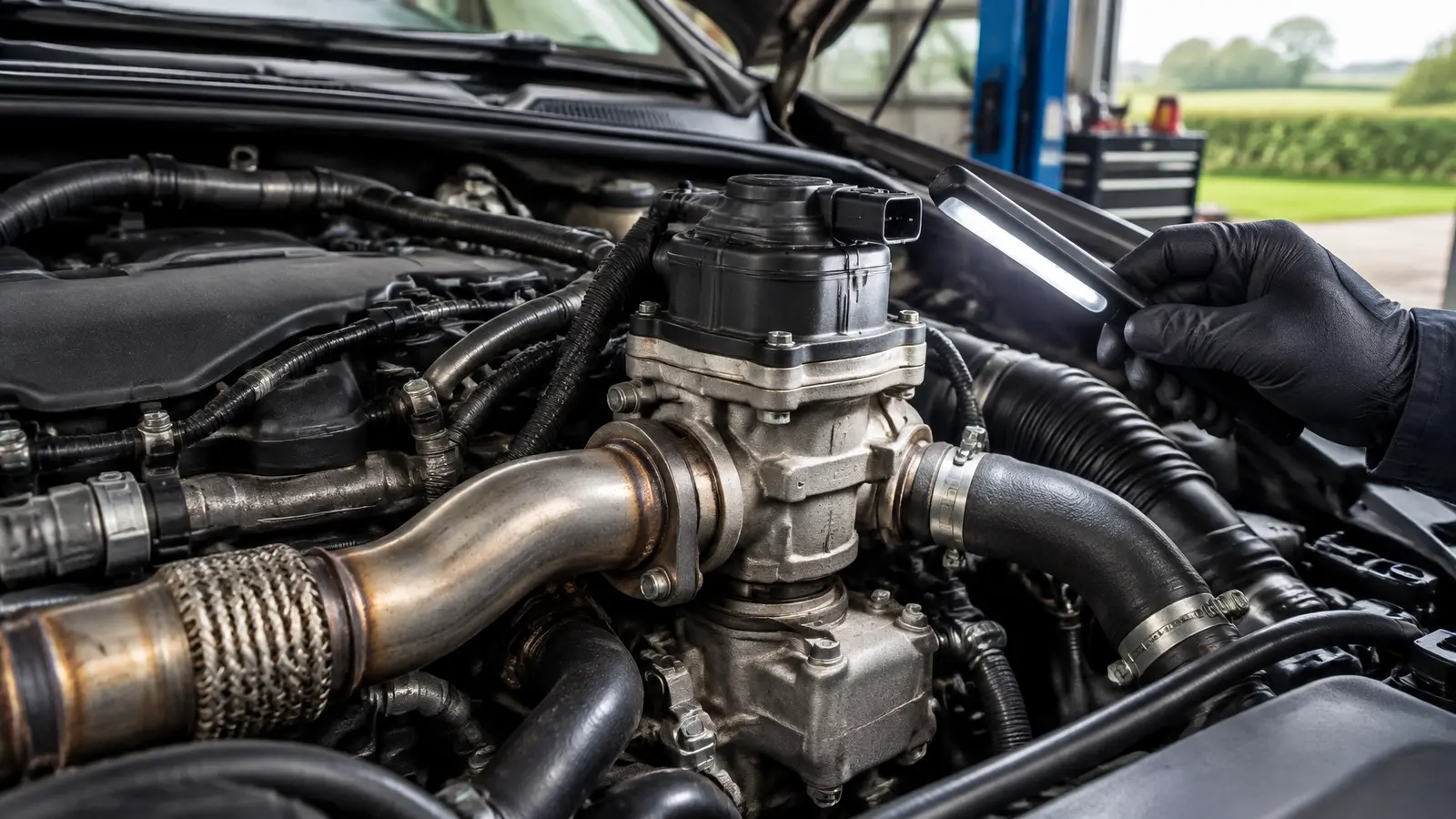
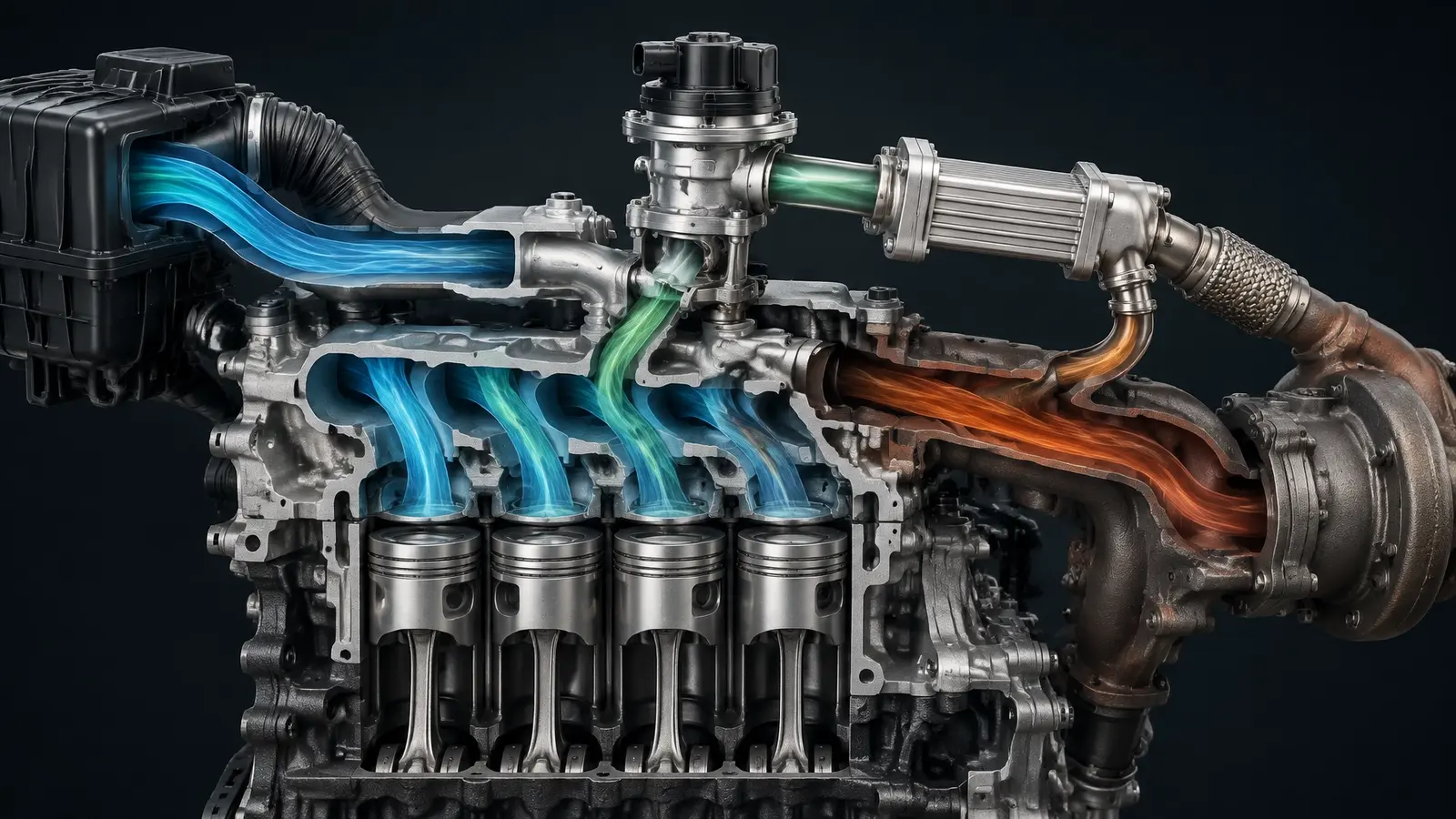
The Exhaust Gas Recirculation system, usually called EGR, routes a controlled amount of exhaust gas back into the engine's intake under conditions set by the vehicle's engine control unit. This helps lower combustion temperatures and reduce nitrogen oxide emissions.
The valve has to move as instructed and the engine's sensors have to report accurately. The ECU compares expected and measured behaviour; if the readings do not match, it may store a fault code and illuminate the engine management light.
02
EGR fault symptoms to watch for
EGR fault symptoms vary by vehicle and by the way the system has failed. Common signs include:
- Rough or uneven idle: an EGR valve that does not close properly can allow exhaust gas into the intake when the engine needs a stable supply of fresh air. - Engine warning light: the ECU may detect that EGR flow, valve position or an associated sensor signal is outside the expected range. - Hesitation or reduced power: incorrect exhaust-gas flow can disrupt the air-fuel balance and affect throttle response, particularly under load. - Limp mode: some vehicles limit engine output when a fault could affect emissions or safe operation. - Smoke: visible smoke can accompany an EGR problem, especially on a diesel, but it can also point to other faults with airflow, fuelling, boost or emissions equipment.
These symptoms are clues, not a diagnosis. A similar warning light or loss of power can come from a sensor, wiring, an intake leak, a turbo or a separate emissions-system problem.
If the engine is stalling, power loss is severe or smoke is heavy and persistent, avoid continuing to drive it under load and arrange a professional assessment. A worsening fault can lead to further damage, an unsafe loss of power in traffic or additional repair work.
03
Why carbon can cause EGR problems
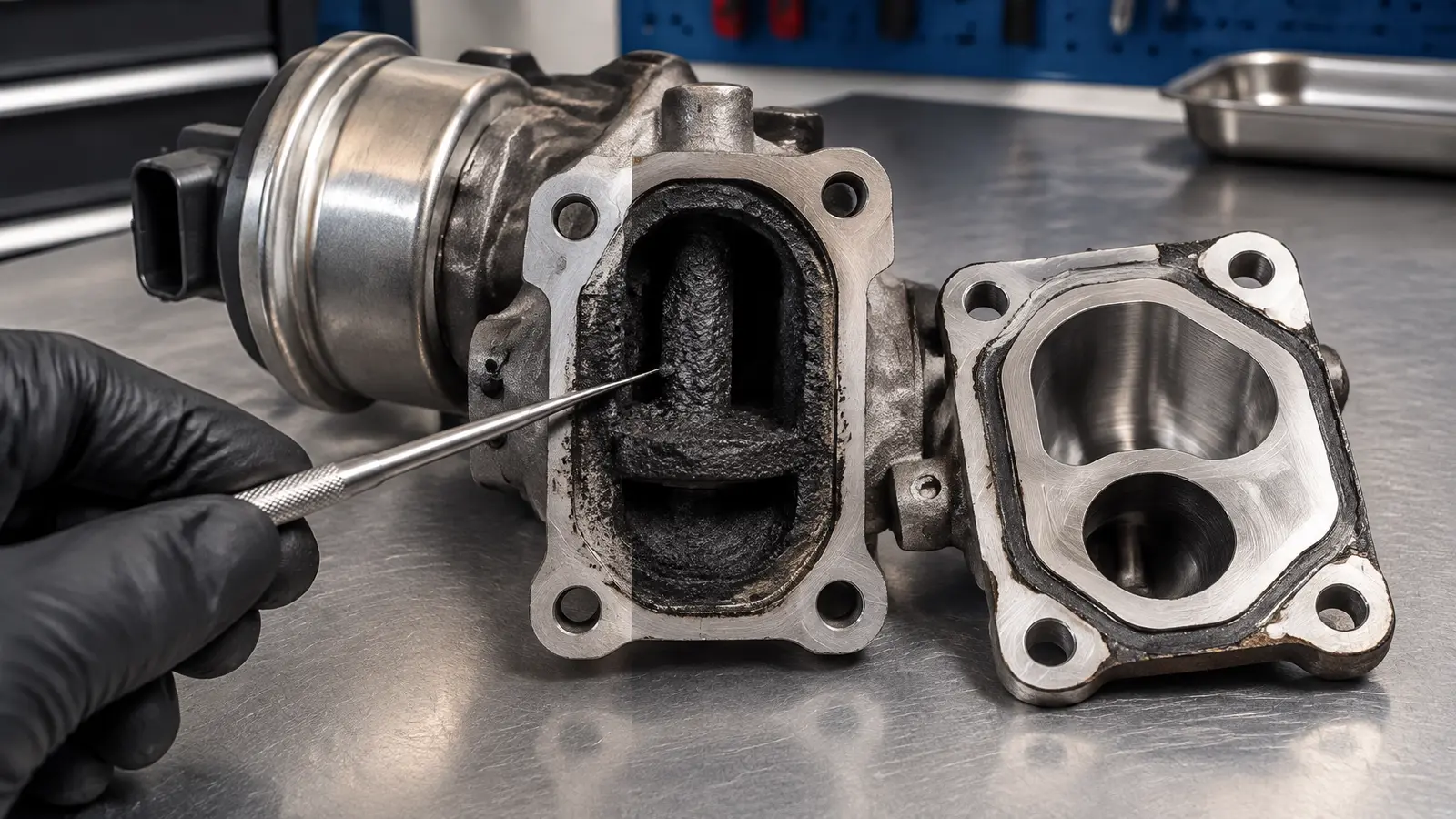
Soot and carbon deposits build up in the EGR valve and its passages over time. Oil vapour and combustion residues can contribute to deposits in the intake system. Eventually, the valve may stick, or the passages may become restricted enough to prevent the expected flow.
A blocked or sticking valve is only one possibility. A failed actuator, position sensor, damaged connector, broken wire or vacuum-control fault can produce similar symptoms. Replacing a valve without checking those related components can leave the warning light and drivability problem unresolved.
04
EGR diagnostics before any remap
A fault code helps direct investigation, but it does not identify every failed part on its own. For example, a code reporting insufficient EGR flow does not automatically prove that the valve needs replacing. The restriction could be elsewhere in the system, or the ECU may be receiving misleading information from a sensor or wiring fault.
A proper diagnostic assessment should look at the stored codes and relevant live data, then compare the commanded valve operation with the response reported by the vehicle. Depending on the vehicle, checks may include the valve and passages, electrical connections, wiring, vacuum controls and related airflow sensors.
This is why we recommend diagnosis before discussing a remap. Changing ECU software before an underlying mechanical or electrical fault has been understood can mask symptoms or leave the original problem in place. Kent Eco Tuning's diagnostics and health checks help establish what the vehicle is reporting before any next steps are considered.
05
Repair or Calibration? The Honest Decision Path
If the EGR valve is sticking because of carbon build-up, cleaning or replacing the valve is the fix, and software will not change that. If the valve operates correctly but the system strategy is causing recurring driveability problems on your routes, a calibration may be the appropriate answer.
The diagnosis tells you which situation you are in. We will not recommend software for a mechanical fault, and we will not recommend a repair when a calibration genuinely fits - the data decides, not the invoice.
06
EGR remap and software solutions: where they fit
Software can change how an ECU operates, but it cannot physically remove carbon, repair a broken wire or restore a failed valve. For a road vehicle with an EGR fault, the appropriate route is to identify the cause and repair or replace the faulty component as required.
Kent Eco Tuning does not offer EGR deletes as a solution for road vehicles. Disabling or defeating emissions equipment is not a substitute for repairing a fault, and it can affect the vehicle's emissions compliance and MOT result. The service details for EGR software solutions and fault diagnosis in Kent explain the distinction between diagnosis, repair and software work.
Where permitted work is considered for a genuine motorsport, competition or off-road vehicle, its intended use and the applicable requirements must be discussed before any work is agreed. A software change should never be presented as a lawful road-car repair simply because it turns off a warning or suppresses a fault code.
07
Software solutions for DPF, AdBlue and EGR
DPF, AdBlue and EGR faults need to be assessed on their own evidence. The correct response depends on the vehicle, its symptoms and what the diagnostic checks reveal.
A physically blocked DPF requires repair, not software changes. Removing or defeating emissions equipment can cause an MOT failure. The GOV.UK MOT inspection manual sets out how emissions equipment, warning lights and smoke are considered during the test. The result depends on the vehicle and the relevant inspection requirements, so a diagnosis should not be replaced with assumptions about an MOT outcome.
For EGR faults, clearing a code without correcting its cause may leave the vehicle running poorly and the fault liable to return. Systems therefore need to be maintained properly.
08
The right next step for Kent drivers and van owners
For everyday drivers, early diagnosis can help distinguish a repairable EGR fault from a separate issue causing rough running or poor response. For tradespeople and van operators, finding the cause promptly can help reduce unnecessary downtime and prevent avoidable parts replacement.
If an EGR warning light appears, note when it occurs and whether there is rough idling, hesitation, smoke or reduced power. Avoid repeatedly clearing the warning without investigation: the stored information may help a technician identify what is happening.
Kent Eco Tuning provides mobile diagnostics across Medway and Kent. For advice, call 07946 854971 or use the contact form. You can also browse the website sitemap for other services and guides.
Website information: Privacy Policy · Terms and Conditions
09
MG Remapping FAQs
10
Will an EGR delete fix the warning light?
Not lawfully for a road vehicle. Removing or defeating emissions equipment can cause an MOT failure. Diagnosis and repair of the faulty component is the right route.
11
Does an EGR fault affect fuel economy?
It can. Incorrect exhaust-gas flow disturbs the air-fuel balance, which may increase consumption alongside the drivability symptoms.
12
Why did the fault return after the code was cleared?
Clearing a code removes the symptom, not the cause. The underlying fault remains until it is diagnosed and repaired.
MINI owners will find the MINI remapping page useful.