
01
Van power loss: common causes
Diesel engines rely on a carefully controlled balance of air, fuel, exhaust flow and sensor data. A fault in any of these systems can make the engine feel flat, restrict acceleration or trigger reduced-power mode. Similar symptoms can have very different causes, so replacing parts based on a guess can waste time and money.
### DPF blockage and short trips
A diesel particulate filter (DPF) traps soot and periodically burns it off through regeneration. Frequent short journeys, stop-start work and repeated interruptions to regeneration can make it harder for the filter to complete this process. Soot can then accumulate, increasing exhaust restriction and reducing performance.
A blocked DPF needs to be properly assessed and, where necessary, repaired. A physically blocked DPF requires repair, not a software change. A software adjustment cannot remove a physical obstruction or restore a damaged filter. Removing or defeating emissions equipment can cause an MOT failure and may make the vehicle illegal for road use. See the GOV.UK guidance on diesel particulate filters.
### EGR fouling
The exhaust gas recirculation (EGR) system returns a controlled amount of exhaust gas to the engine to help manage emissions. Soot and oil deposits can affect the valve or its passages. If the valve sticks or the system does not flow as expected, the van may feel sluggish, run unevenly or show an engine warning light.
A fault code can point towards an EGR issue, but it does not prove that the valve itself is the cause. Wiring, connectors, airflow and related components need to be checked before deciding what repair is appropriate. Emissions equipment should remain present and functional.
### Intake and boost leaks
A split hose, loose connection or leaking intercooler can let pressurised air escape before it reaches the engine. The van may lose pulling power under load, while a hiss or whoosh, smoke or an underboost fault may offer further clues.
A visual check can find obvious damage, but some leaks only show up when the system is pressurised or the engine is under load. A workshop-style pressure or smoke test, combined with live boost data, can help locate the source rather than treating the symptom.
### Turbo and wastegate faults
A turbocharger, its actuator, wastegate or variable-vane mechanism can stick, leak or fail to respond correctly. Vacuum hoses and control solenoids can also affect how boost is managed. The result may be weak acceleration, intermittent limp mode, unusual turbo noise or, in some cases, excessive boost.
The turbo should not automatically be blamed when a van feels down on power. A boost leak, control fault or sensor issue can produce similar symptoms. Diagnosis should compare the boost the engine is requesting with what it is actually producing.
### Fuel, injectors and filters
A restricted fuel filter, contaminated or incorrect fuel, low fuel pressure or an injector fault can cause poor acceleration, rough running, difficult starting or smoke. If the change began after refuelling, tell the technician. That timing is useful evidence, but the fuel system still needs proper checks.
Testing may include checking fuel pressure and injector operation against manufacturer guidance. An injector should not be condemned from a symptom alone; other faults can affect fuel pressure and produce similar results.
### Sensors and glow plugs
Airflow, boost-pressure, exhaust-temperature and DPF pressure sensors all provide information the engine control unit uses to manage performance. A sensor reading that is incorrect or implausible can trigger protective power reduction. The sensor, its wiring and the related hoses or system should be checked before replacement.
Glow-plug faults are more commonly associated with cold starting, rough running after start-up or smoke while the engine warms. They are not usually the first explanation for a van that only loses power under load once warm. Their role depends on the vehicle and the conditions in which the symptoms appear.
02
Why a van remap will not fix a mechanical fault
A remap changes the engine's software calibration. It can tailor how the engine responds to requests for torque and power, but it cannot seal a split hose, clear a physically blocked DPF, repair an injector or free a sticking turbo mechanism.
Trying to tune around an unresolved fault can make diagnosis harder and put extra strain on a vehicle that is already unwell. Do not use a remap as a substitute for repair. If the van has warning lights, reduced-power mode, abnormal smoke, unusual noises or a sudden change in performance, have it assessed before considering tuning.
Ignoring the problem can turn a manageable fault into a more disruptive one. A van may enter limp mode on a job, need recovery or suffer further damage if it continues to be driven with a serious underlying issue. A faulty emissions system may also lead to an MOT failure. If a warning is severe, the van is producing heavy smoke or it is unsafe to drive, stop and seek professional advice.
03
A diagnostic health check before remapping
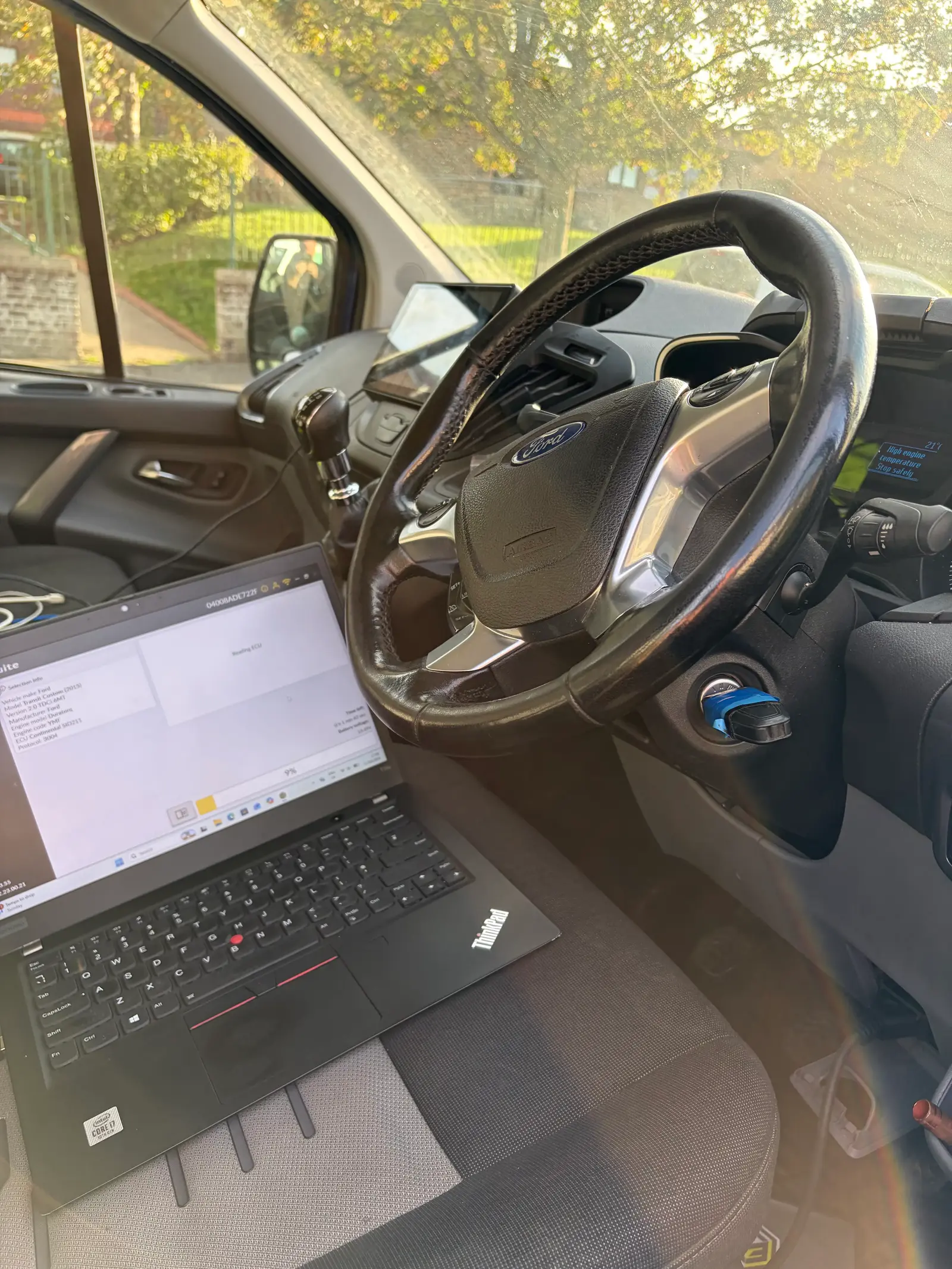
A useful health check looks for evidence, not just a list of stored fault codes. Our diagnostics and vehicle health checks can help establish whether the van is suitable for tuning or needs attention first.
Depending on the vehicle and symptoms, checks may include:
- Reading engine fault codes and relevant stored information. - Inspecting intake pipes, boost hoses, vacuum lines and electrical connections. - Comparing requested and actual readings for boost, airflow and fuel pressure. - Checking DPF pressure data and whether regeneration is completing as expected. - Assessing EGR operation and related sensor readings. - Testing further where the initial results point to a mechanical or fuel-system fault.
Fault codes are clues, not a diagnosis by themselves. Their meaning depends on the vehicle, its symptoms and the data recorded when the fault occurred. A technician may recommend repair by an appropriate garage if the problem is mechanical. The cause should be confirmed before any tuning is considered.
04
When a van remap is the right next step
Once a van is mechanically healthy, a tailored remap may be worth considering if the driver wants stronger mid-range torque, smoother throttle response or a more suitable feel when carrying tools and materials. For a working van, the aim is not simply to chase peak power. The calibration should suit the vehicle, its condition and how it is used.
A tradesperson focused on running costs may prefer an economy-oriented approach, while a driver who regularly carries a load or tows may prioritise useful torque and drivability. Fuel results depend on the vehicle, route, load, driving style and maintenance, so no improvement should be treated as guaranteed.
Our van and fleet remapping service focuses on a vehicle-specific approach rather than unrealistic figures. For more information about the process, visit our ECU remapping service page.
05
Correct diagnosis first, software second
If your van is losing power, note when the problem happens, whether it is worse under load, and whether warning lights, smoke or unusual sounds appear. Share those details with the technician. They can help guide the checks, but only a proper assessment can confirm the cause.
Kent Eco Tuning provides mobile diagnostics and remapping across Medway and Kent. To discuss a power-loss concern or ask whether your van is suitable for tuning, contact our team or call 07946 854971. Visit www.kentecotuning.co.uk.
Privacy Policy | Terms and Conditions | Kent Eco Tuning | Sitemap
06
MG Remapping FAQs
07
Is a DPF warning the same as low power?
They often appear together but are not the same fault. A blocked filter, a boost leak or a sensor problem can each cause power loss, which is why diagnosis comes first.
08
Can a remap fix a power problem?
No. Software changes how the engine delivers its performance; it cannot repair a failing turbo, a boost leak or a sensor fault. Diagnose and repair first.
09
Should I keep driving a van in limp mode?
No. Limp mode protects the engine, but continuing to load a vehicle with an unresolved fault risks expensive damage. Arrange diagnosis promptly.