
01
ECU Remap vs Tuning Box: How Each Works
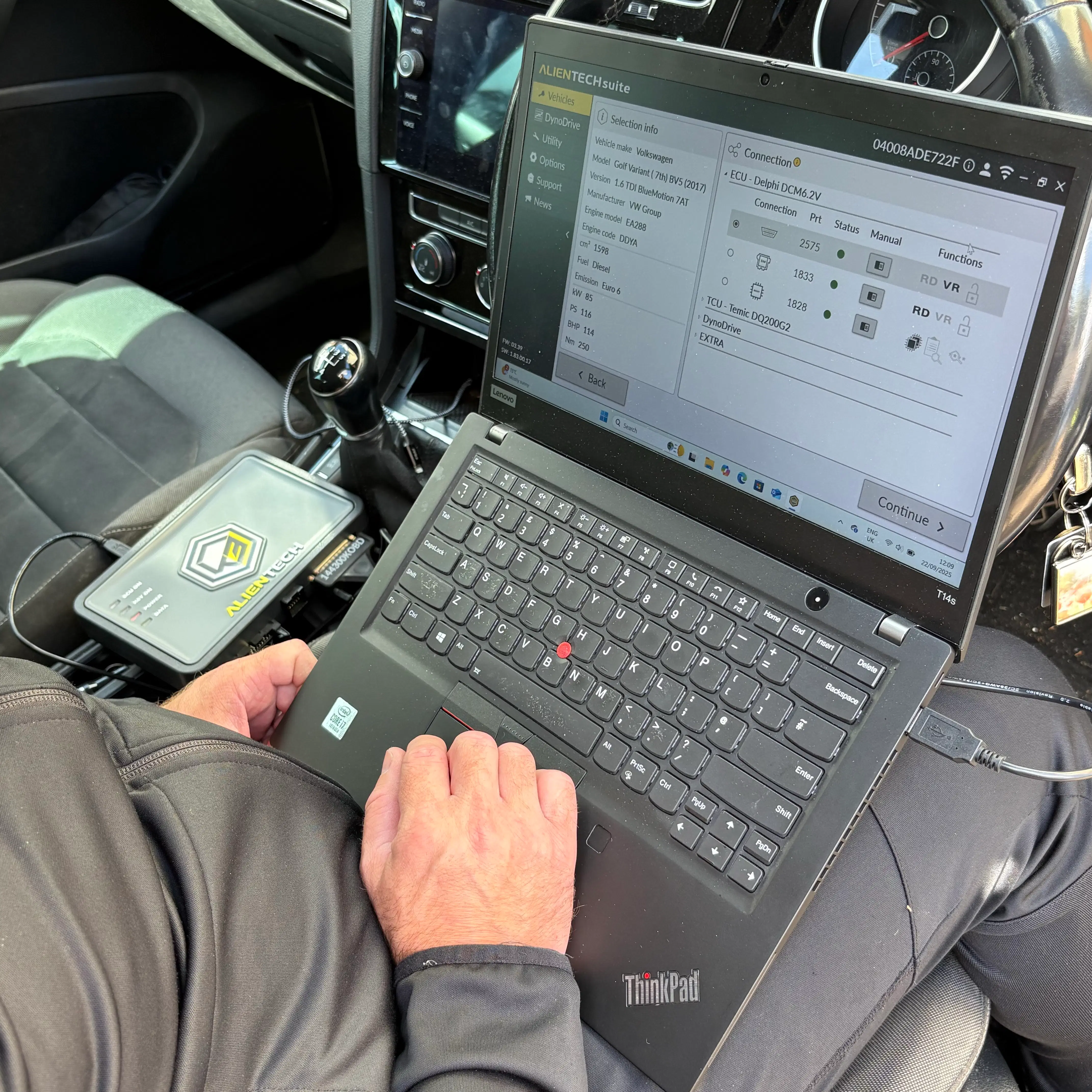
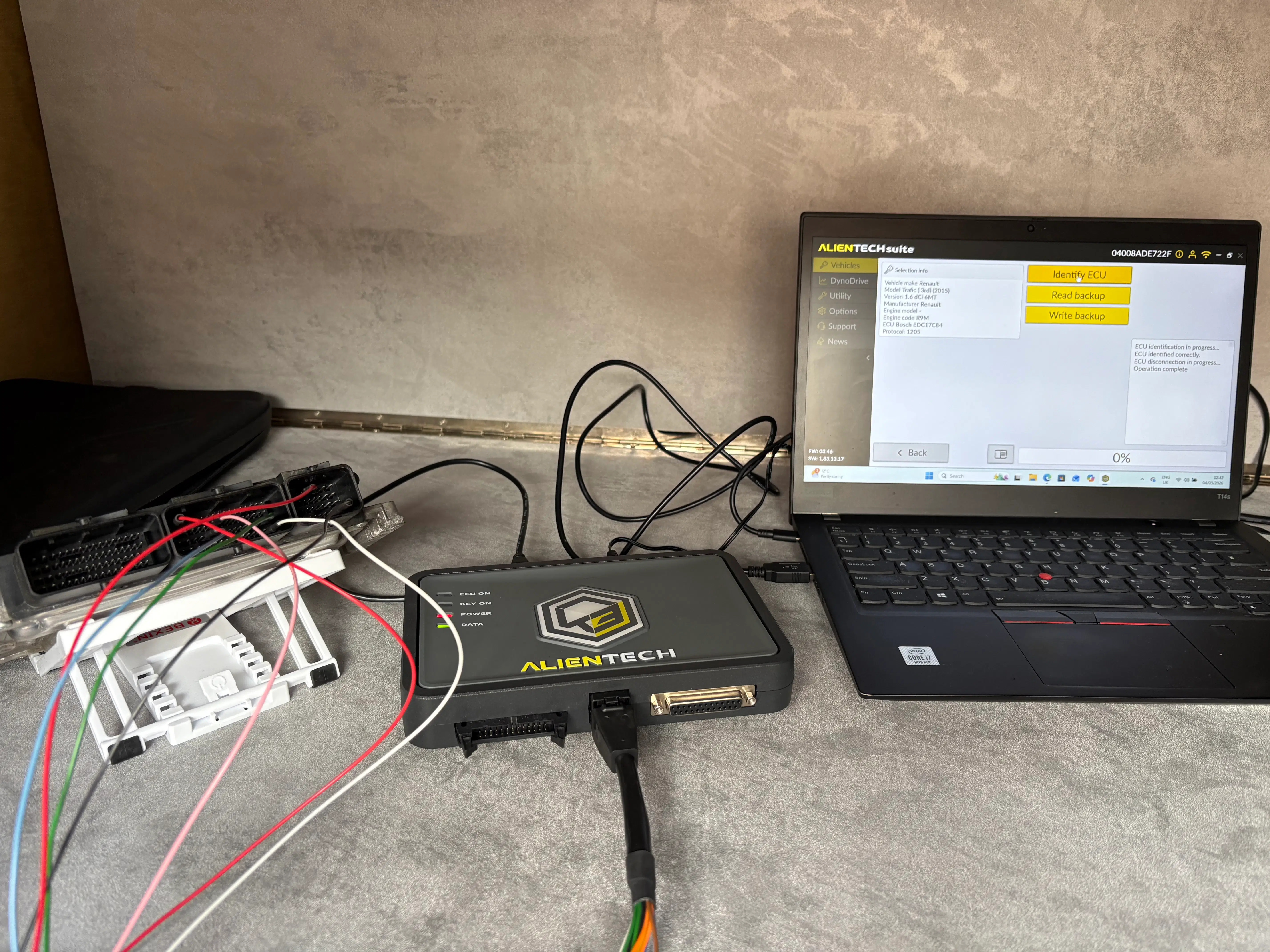
An ECU remap changes the calibration stored in the vehicle's engine control unit (ECU). The ECU manages connected functions such as fuelling, boost, torque requests and throttle response. A professional remap is developed to adjust relevant parameters within that existing control system, with the aim of making the power delivery better suited to the vehicle and the driver's priorities.
A plug-in tuning box is a separate module fitted between selected sensors and the ECU, or connected through a vehicle-specific wiring harness. Depending on its design, it alters signals reaching the ECU. The original ECU software remains in place, but the ECU may respond to the modified signal by changing how it controls the engine.
That difference matters. A remap works with the ECU's calibration; a box influences the information the ECU receives. The details vary between products and vehicles, so neither option should be judged by its label alone.
02
Custom ECU Remap: Integrated Calibration
A remap can be tailored to a particular ECU version and vehicle specification. Depending on the vehicle and the work being undertaken, this may involve adjusting linked maps for torque demand, boost control, fuelling and throttle response.
A properly considered calibration takes account of how those systems interact. The aim is not simply to request more output, but to shape the response while respecting the vehicle's mechanical limits and retaining appropriate operating strategies.
For an everyday driver, that may mean more progressive acceleration or a more useful mid-range response. For a tradesperson, it may mean torque that feels more accessible when carrying tools or driving a loaded van. Those are potential characteristics, not guaranteed results: actual suitability and outcome depend on the vehicle, its condition, its hardware and the calibration selected.
Find out more about Kent Eco Tuning's ECU remapping service, or use the vehicle checker as a starting point for checking your vehicle's options.
03
Tuning Box: Convenient, but Less Integrated
A tuning box is generally removable and may be simpler to install or return to standard than changing the ECU software. That can appeal to owners who value reversibility. However, ease of fitting does not establish that a box is correctly matched to a vehicle, or that its effect on the ECU has been properly validated.
Products differ: some alter a limited number of sensor signals, while more sophisticated units may use multiple channels or additional control strategies. Compatibility should be confirmed against the exact engine, fuel system, ECU and vehicle configuration. A connector that fits is not, by itself, proof of a suitable application.
Because the ECU still runs its original calibration, it may not have the same coordinated adjustment of related control maps as a remap. Depending on the vehicle and box, altered inputs can also create a mismatch between what the ECU expects and what the engine is doing. Possible consequences include warning faults, poor running or protective intervention. A tuning box is not automatically safer because it can be unplugged.
04
Power, Economy and Efficiency: Choose the Right Priority
There is no single best choice for every driver. The right approach depends on what the vehicle needs to do and what trade-offs are acceptable.
- Power-focused driving: A performance-oriented calibration prioritises stronger response and power delivery. More demand can place additional load on components such as the clutch, transmission, turbocharger and fuel system, so vehicle health and realistic limits matter.
- Economy-focused driving: An economy-oriented calibration aims to make useful torque more accessible during ordinary driving. Any fuel effect depends on the vehicle and how it is driven; fuel savings should not be assumed or guaranteed.
- Balanced everyday use: A more measured approach can prioritise smooth response and useful torque without pursuing the highest possible output.
- Reversibility: A removable box may appeal to someone who wants a hardware module that can be taken off. A remap changes the ECU software, although original data may be retained as part of a professional process. Ask the provider how restoration is handled for the specific vehicle.
05
Compatibility and Installation: Check Before You Commit
A remap must suit the ECU software and vehicle configuration. Vehicles sharing a model name may still have differences in engine, ECU, gearbox or emissions equipment. A box also needs exact compatibility with its intended engine and electrical system.
Before either is fitted, ask what vehicle details have been checked, what the process involves, what happens if a fault appears and how the vehicle can be returned to its original setup. Owners should also check manufacturer or leasing terms and speak with their insurer about modifications. Requirements can vary, so do not assume that a modification is covered automatically.
06
Diagnostics and Health Checks: Protect the Vehicle First
Problem: An engine may have an existing fault, such as a boost leak, sensor issue or developing fuel-system problem, even if it still feels driveable.
Consequence: Adding a tuning device or changing software before identifying the fault can worsen symptoms, trigger protective modes or contribute to expensive damage.
Solution: Check the vehicle's condition before changing its calibration. Professional diagnostics can help identify stored faults and assess whether the vehicle is a suitable candidate. Any existing issue should be dealt with first; tuning is not a repair.
Systems such as the DPF and EGR also need to be maintained properly. A physically blocked DPF requires repair, not a software change. Removing or defeating emissions equipment can cause an MOT failure. Software changes must not be treated as a substitute for repairing faulty or blocked hardware.
07
Which Option Is Right for Your Car or Van?
A plug-in box may suit someone who values a removable device and whose vehicle has a properly engineered, confirmed-compatible product available. A custom ECU remap may suit someone seeking an integrated calibration matched to the vehicle and their priorities. Neither method removes the need for careful compatibility checks, sound workmanship and a healthy engine.
Kent Eco Tuning provides professional ECU remapping, diagnostics and health checks for cars and vans across Medway and Kent. Our advice is based on the vehicle and the driver's aims, whether that is everyday drivability, a sharper response or improved usability for work. Contact us through the website or call 07946 854971 to discuss your vehicle. No result can be guaranteed, and any modification should comply with applicable road, emissions, insurance and MOT requirements.