5 Steps How to Improve Van Fuel Economy and Reduce Fleet Costs (Easy Guide for Kent Tradespeople)
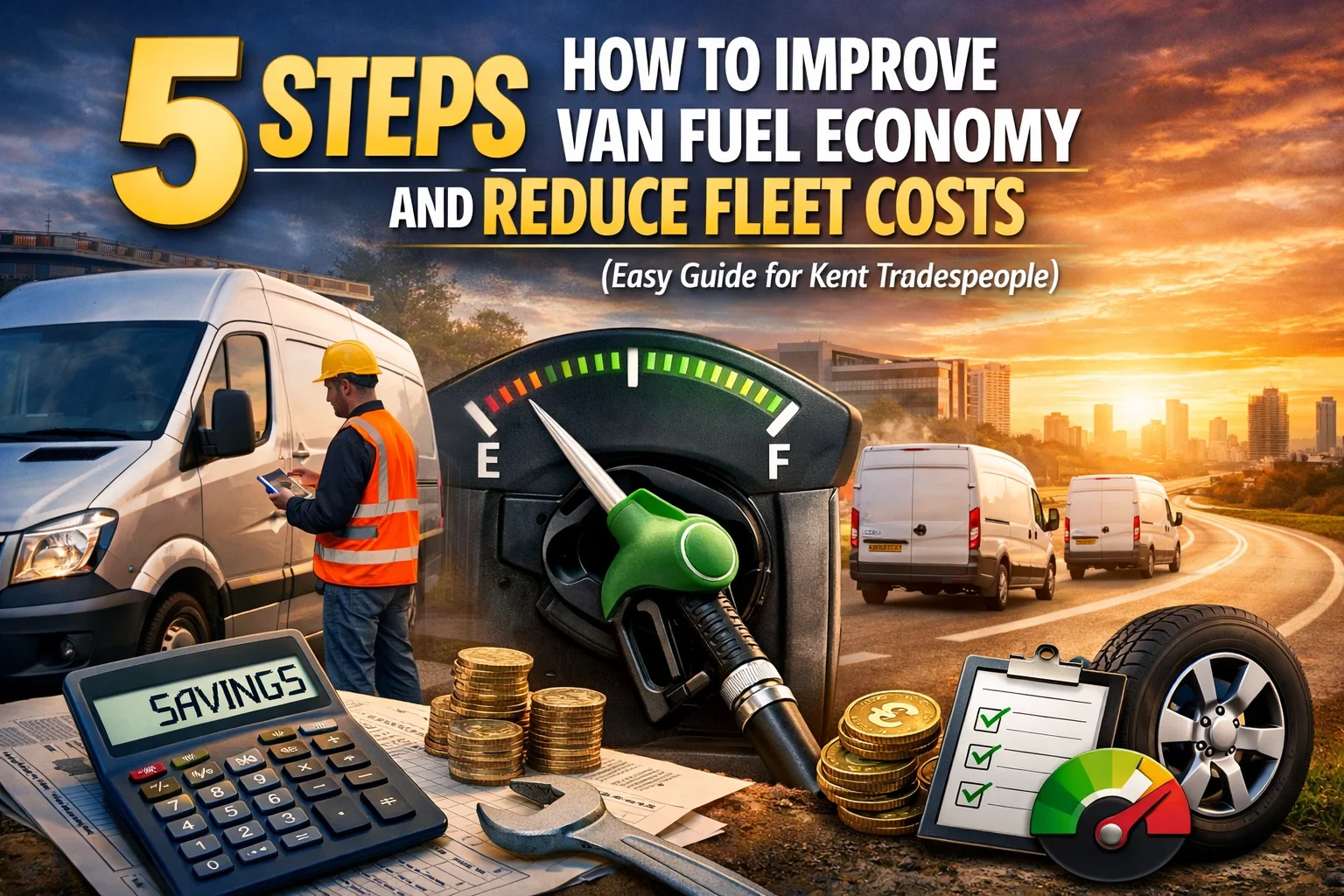
Unlock the hidden potential of your commercial vehicle and elevate your business profitability by optimizing your fleet’s most significant overhead: fuel consumption. For tradespeople across Kent and Medway, a van is not just a mode of transport; it is a mobile workshop, a vital tool, and a significant cost center. In an era of fluctuating pump prices and increasing operational demands, maintaining a competitive edge requires a strategic approach to vehicle efficiency.
Operating a fleet: whether it is a single Transit or a dozen Sprinters: demands more than just keeping the tank full. It requires a sophisticated understanding of how mechanical health, driving physics, and software calibration intersect. At Kent Eco Tuning, we provide the technical expertise to help you reduce running costs through professional van fuel economy tuning and honest, expert advice.
1. Precision Tire Management and Rolling Resistance
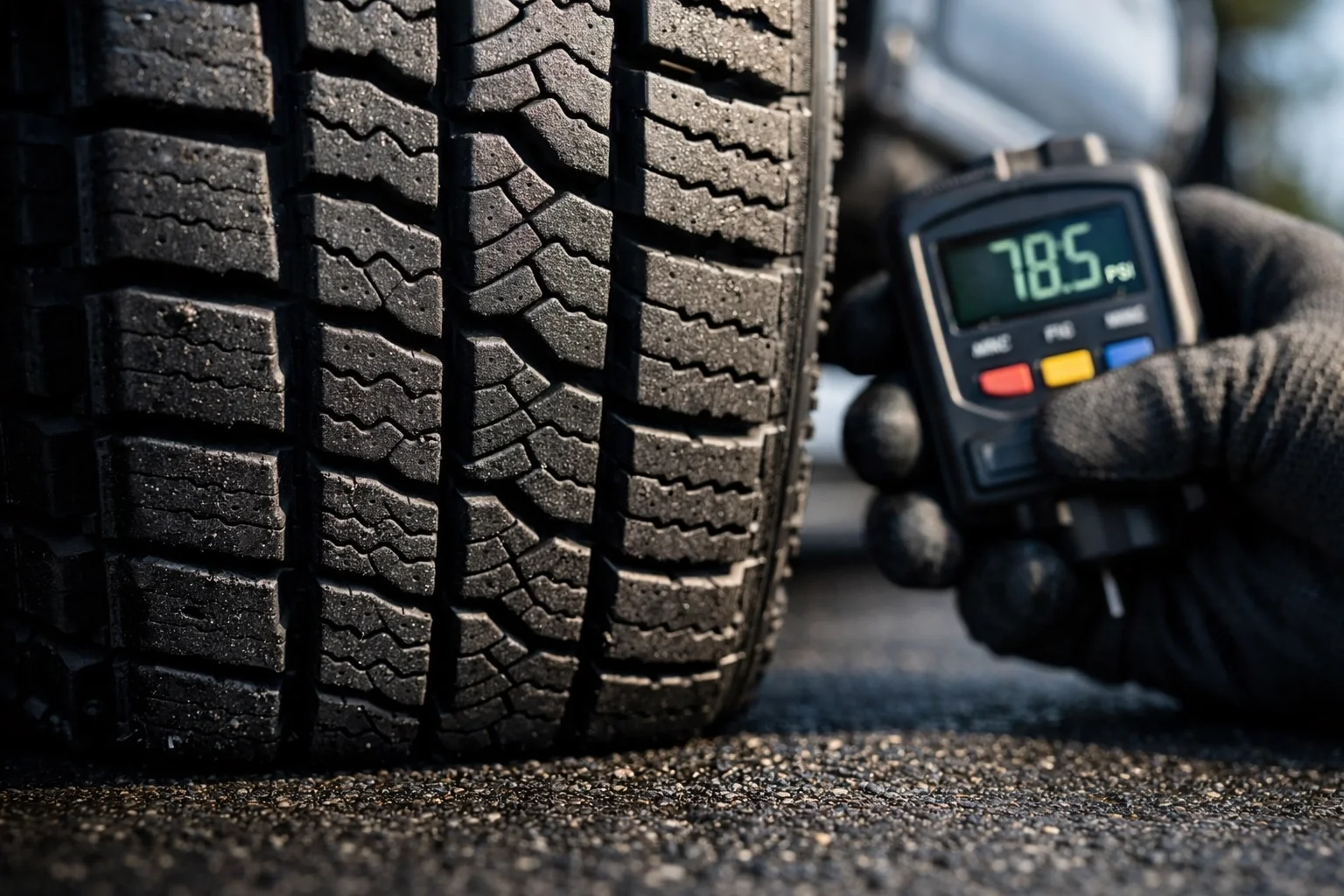
The relationship between your van’s tires and the tarmac is the primary factor in determining rolling resistance. Underinflated tires are a silent drain on your company’s finances. When a tire is underinflated, the surface area in contact with the road increases, creating more friction and forcing the engine to work harder to maintain speed.
Technical data suggests that underinflated tires can reduce fuel economy by up to 25%. Even a minor drop of 8 PSI can increase rolling resistance by 5%. For a tradesman covering 20,000 miles a year across the M2 or A2, this equates to hundreds of pounds in wasted fuel.
The Solution:
Check your tire pressure at least once a month using a high-quality gauge. Always adhere to the manufacturer’s recommended PSI, which is typically found on the driver-side B-pillar or inside the fuel filler cap. Maintaining correct pressure not only saves fuel but also ensures even tire wear, extending the lifespan of your rubber and reducing the frequency of expensive replacements.
2. Predictive Driving and Throttle Load Calibration
The most advanced engine in the world cannot compensate for inefficient driving habits. Aggressive acceleration and heavy braking: often common in time-pressured trade environments: significantly increase throttle load and fuel bypass. Rapid acceleration forces the ECU (Engine Control Unit) to dump more fuel into the cylinders to meet the demand for immediate torque, much of which is wasted as heat and emissions rather than motion.
Research indicates that fuel efficiency drops rapidly once a vehicle exceeds 50 mph. For every 5 mph driven over this threshold, you are effectively paying a premium on every gallon of diesel. Driving just 5-10 mph slower on long stretches of the Kent motorway network can yield a 7-14% improvement in fuel economy.
The Solution:
Adopt a "predictive driving" style. By looking further down the road, you can anticipate traffic flow and ease off the accelerator early rather than braking hard. Utilizing cruise control on flat, arterial roads helps maintain a consistent engine RPM and prevents the micro-fluctuations in speed that lead to fuel wastage.
3. Aerodynamic Integrity and Weight Optimization
Every extra kilogram in your van requires more energy to move. Tradespeople often fall into the trap of carrying "just in case" tools or old materials that should have been cleared out weeks ago. Furthermore, the external profile of the vehicle plays a massive role in drag.
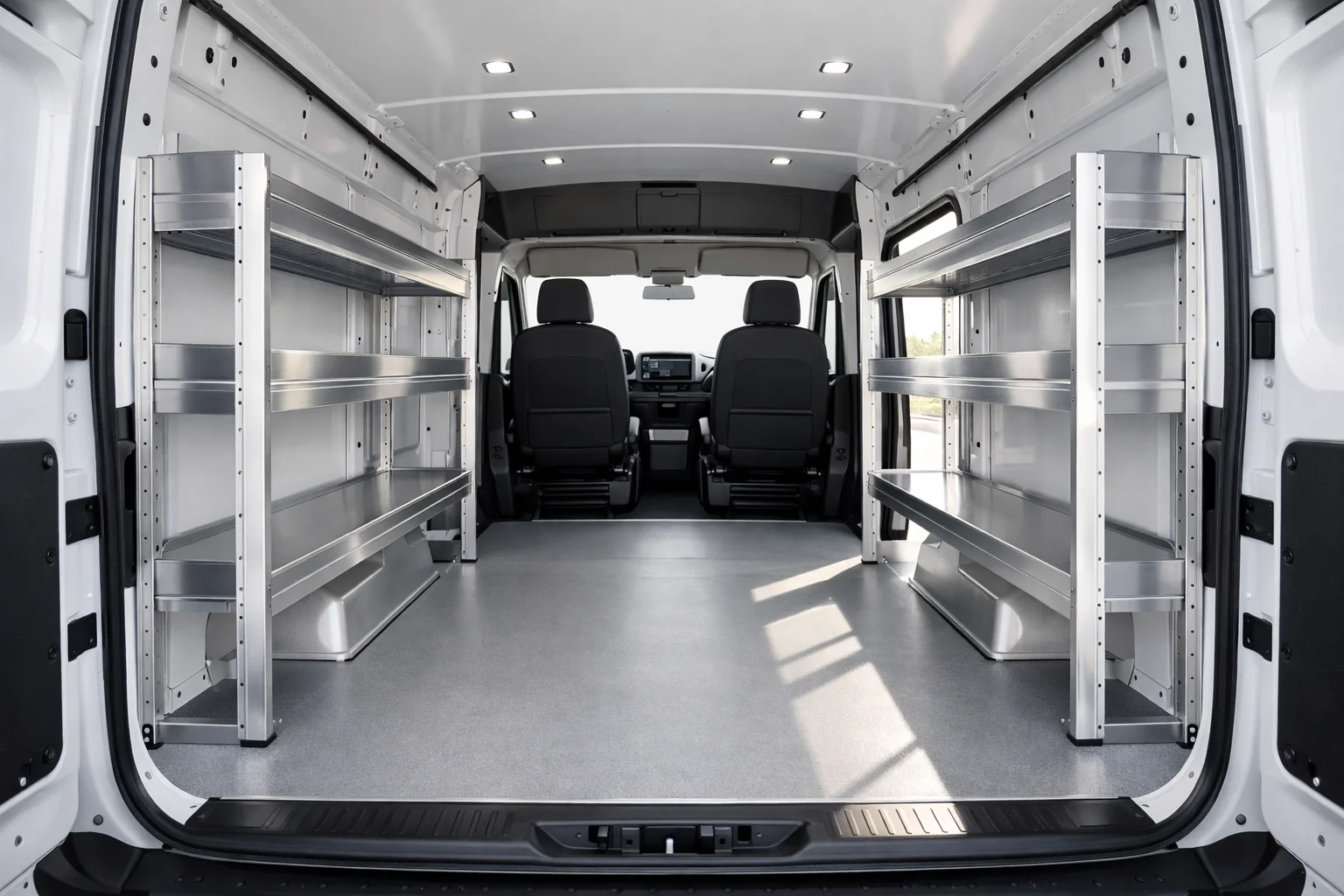
While heavy-duty steel racking is durable, it adds significant dead weight. If you are in the process of upgrading your fleet, consider aluminium shelving alternatives, which can be up to 40% lighter than steel without sacrificing structural integrity.
The Solution:
Conduct a weekly "weight audit" of your vehicle. Remove unused equipment and clear out debris. If your van is fitted with roof racks that are not currently in use, remove them. At motorway speeds, the aerodynamic drag caused by empty roof bars can decrease fuel efficiency by as much as 10%. Keeping the vehicle's profile "clean" ensures that the engine isn't fighting unnecessary wind resistance.
4. Proactive Maintenance and Emissions System Health
A poorly maintained engine is an inefficient engine. Components such as clogged air filters or faulty oxygen sensors can cause the engine to run "rich," burning more fuel than necessary. For modern diesel vans, the health of the DPF (Diesel Particulate Filter) and EGR (Exhaust Gas Recirculation) systems is paramount.
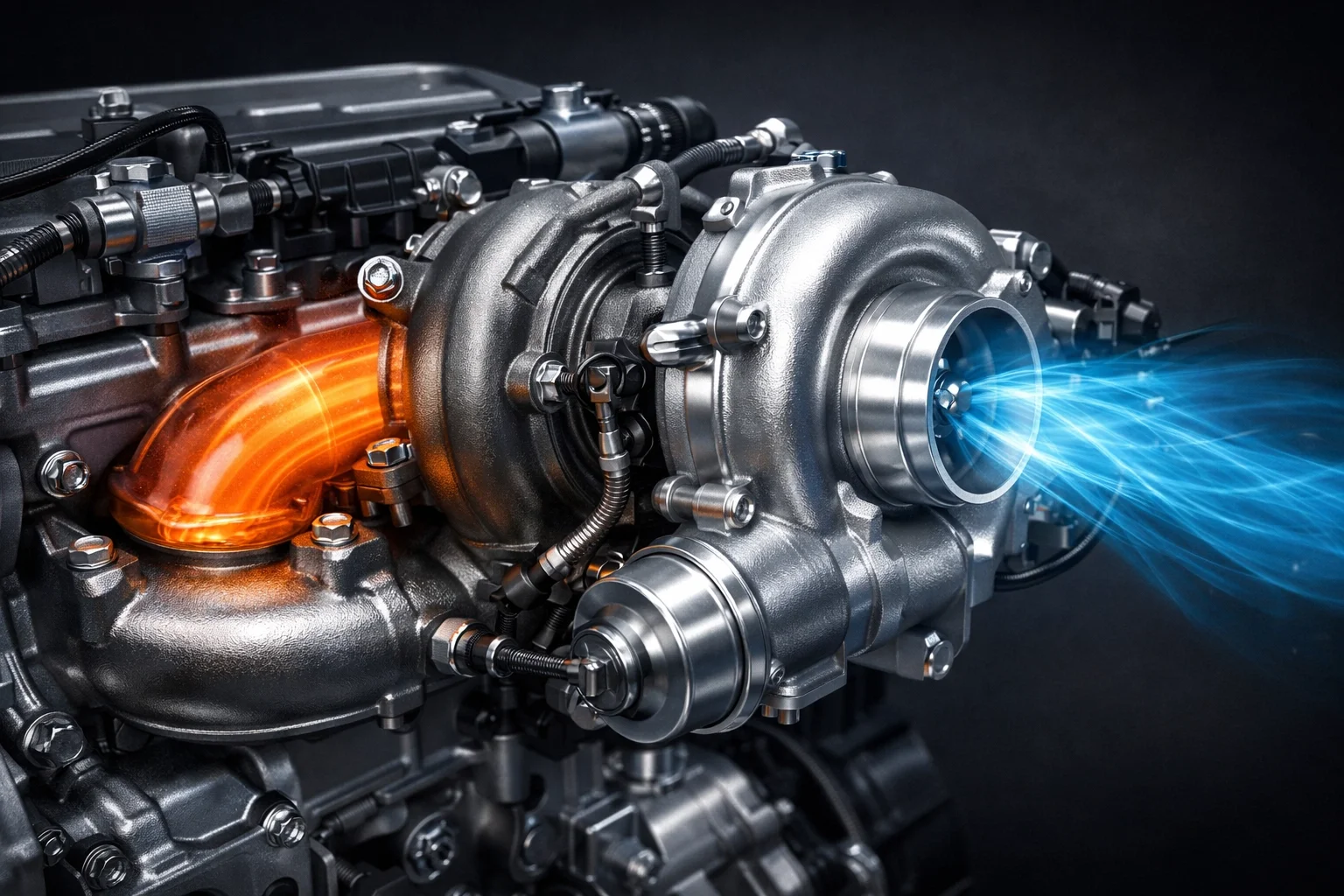
If these systems become restricted due to soot buildup, backpressure increases, forcing the engine to work harder and consume more fuel to push exhaust gases through the blockage. Ignoring these signs can lead to "limp mode" and expensive damage to the turbocharger or engine internals.
The Solution:
Follow a strict service schedule. Ensure air filters are replaced regularly to allow the engine to "breathe" efficiently. If you notice a drop in MPG or a warning light on your dashboard, seek professional diagnostic advice immediately. We offer specialized DTC removal and diagnostic services to identify the root cause of efficiency drops before they become catastrophic failures.
5. Van Fuel Economy Tuning: The Professional Calibration Solution
While the steps above are essential, the most significant leap in efficiency comes from optimizing the software that controls the engine. Manufacturers calibrate van engines with a "one size fits all" approach, often leaving a substantial margin for improvement in both power and economy.
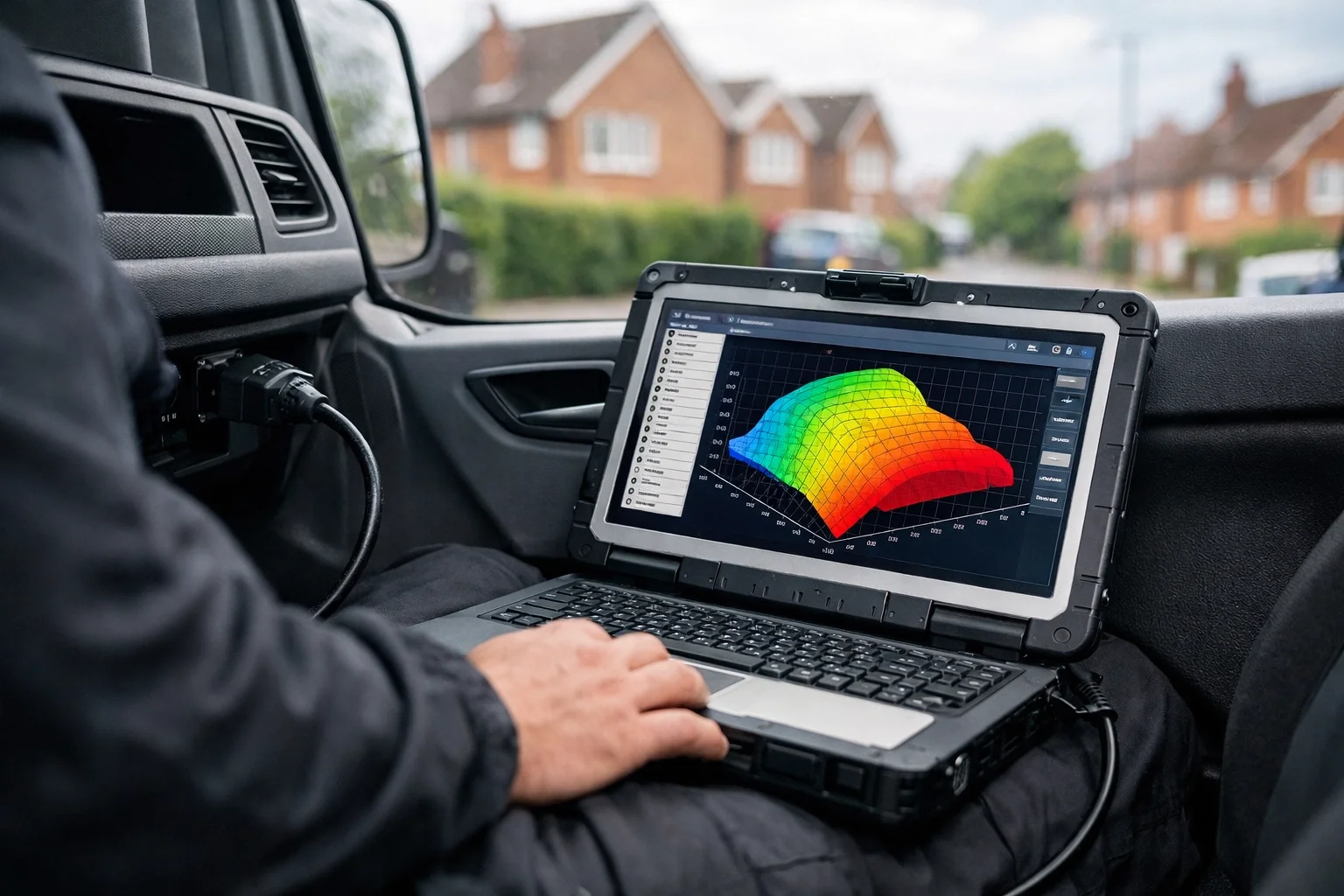
ECU remapping Kent is the process of modifying the software maps within the vehicle’s computer to optimize fuel injection timing, boost pressure, and torque limits. Our "Economy Map" or "BlueOptimize" service is specifically designed for the working professional. By increasing low-end torque, the vehicle can pull higher gears at lower speeds, reducing the need for downshifting and high-RPM driving.
The Benefit of Professional Calibration:
Fuel improvements of 8-10%: Depending on the vehicle and driving style, the fuel savings often pay for the remap within a few months.
Increased Torque: Improved driveability when fully loaded, making the van feel lighter and more responsive.
Reduced Carbon Footprint: By burning fuel more efficiently, your fleet becomes more environmentally friendly.
At Kent Eco Tuning, we provide a professional mobile remapping service across the entire Kent and Medway area. We understand that your time is money, which is why we come to your home or workplace, ensuring zero downtime for your business.
Why Choose Kent Eco Tuning for Your Fleet?
When it comes to your livelihood, you shouldn't trust your vehicle to "file flunkeys" or uninsured hobbyists. We take a serious, technical approach to vehicle performance.
Fully Insured: We carry comprehensive insurance to give you total peace of mind while we work on your vehicle.
Expert Technical Knowledge: From AdBlue solutions to gearbox tuning, we understand the complex interplay of modern vehicle systems.
Honest Advice: If a remap isn't the right solution for your specific problem, we will tell you. We value long-term relationships with our local Kent tradespeople over a quick sale.
Convenience: Our mobile service means we work around your schedule, whether you're on a site in Maidstone or at home in Gillingham.
Conclusion: Optimizing for the Long Haul
Improving van fuel economy is a multi-faceted challenge that requires a combination of good habits, regular maintenance, and smart technology. By implementing these five steps, you can significantly reduce your overheads and keep your business moving efficiently.
Don't let inefficient factory settings drain your profits. If you are ready to see what your van is truly capable of, use our Vehicle Checker to see the potential gains for your specific make and model.
For honest advice and professional service, contact us today. Let's get your fleet running at peak efficiency.