

01
Engine Management Light: What It Signals
The engine management light, sometimes called the check-engine light or malfunction indicator lamp, is linked to the vehicle's engine and emissions-control systems. It may come on when sensors report readings outside expected limits, when a component is not responding as intended, or when the vehicle's computer detects a fault in its control circuit.
It is normal for many dashboard warning lights to illuminate briefly when the ignition is switched on. The engine management light should usually go out after the vehicle starts. If it stays on, returns while driving, or begins flashing, treat it as a warning that needs attention. Check the vehicle handbook too, because the symbol and instructions can vary by model.
The light alone cannot tell you whether the cause is minor or serious. A car may feel normal even when a fault is stored, while another fault may cause rough running, reduced power or poor response. A warning light is a reason to investigate, not a diagnosis in itself.
02
Can I Keep Driving With the Light On?
A steady light means the engine has detected something worth investigating but the car usually remains drivable in the short term. A flashing light means stop as soon as it is safe, because continuing can turn a sensor issue into catalytic converter or engine damage.
The honest answer for most drivers: keep journeys short and gentle, avoid towing or heavy load, and get the code read the same week. The fault does not usually fix itself, and the longer it is ignored the more the repair tends to cost.
03
Steady or Flashing: Know When to Stop
A steady amber engine management light, with no unusual symptoms, does not automatically mean the car must be stopped immediately. If the vehicle is behaving normally, avoid hard acceleration and unnecessary engine load, and arrange a diagnostic check promptly. Only continue a necessary journey if it feels safe to do so.
A flashing engine management light is more urgent. It can indicate an active fault, such as a misfire, that may damage the catalytic converter if the vehicle is driven on. Reduce speed and engine load, pull over somewhere safe, and switch off the engine. Seek breakdown assistance or professional advice rather than continuing as normal.
Stop as soon as it is safe and seek help if the warning appears alongside severe shaking, substantial power loss, smoke, unusual noises, overheating, or a burning smell. A red oil-pressure or temperature warning is also a separate urgent warning: follow the handbook and do not keep driving in the hope that it will clear.
The AA offers general guidance on what to do when the engine management light comes on. The vehicle handbook and the symptoms you can observe should guide your immediate decision; online advice cannot assess the vehicle's condition remotely.
04
Common Engine Management Light Causes
The engine management light can be triggered by faults in different systems, so there is no reliable one-size-fits-all fix. Common causes include:
- Ignition or combustion faults: worn spark plugs, failing ignition coils or fuelling issues can lead to misfires and rough running. - Sensor or wiring faults: a sensor may be faulty, a connection may be damaged, or wiring may interrupt the signal the engine computer needs. - Air intake or fuel-mixture problems: an air leak, a restricted intake or a mass-airflow sensor fault can affect how the engine balances air and fuel. - Emissions-system faults: an oxygen sensor, catalytic converter, EGR system or diesel particulate filter problem can bring on the light. - Other vehicle-specific faults: the precise cause depends on the vehicle's design, software and operating conditions.
A fault connected to the DPF, for example, may involve the filter itself, a sensor, a pressure reading or the conditions needed for regeneration. A warning light does not prove the DPF is physically blocked. Read more about DPF issues and suitable next steps.
05
Read the Fault Before Replacing Parts
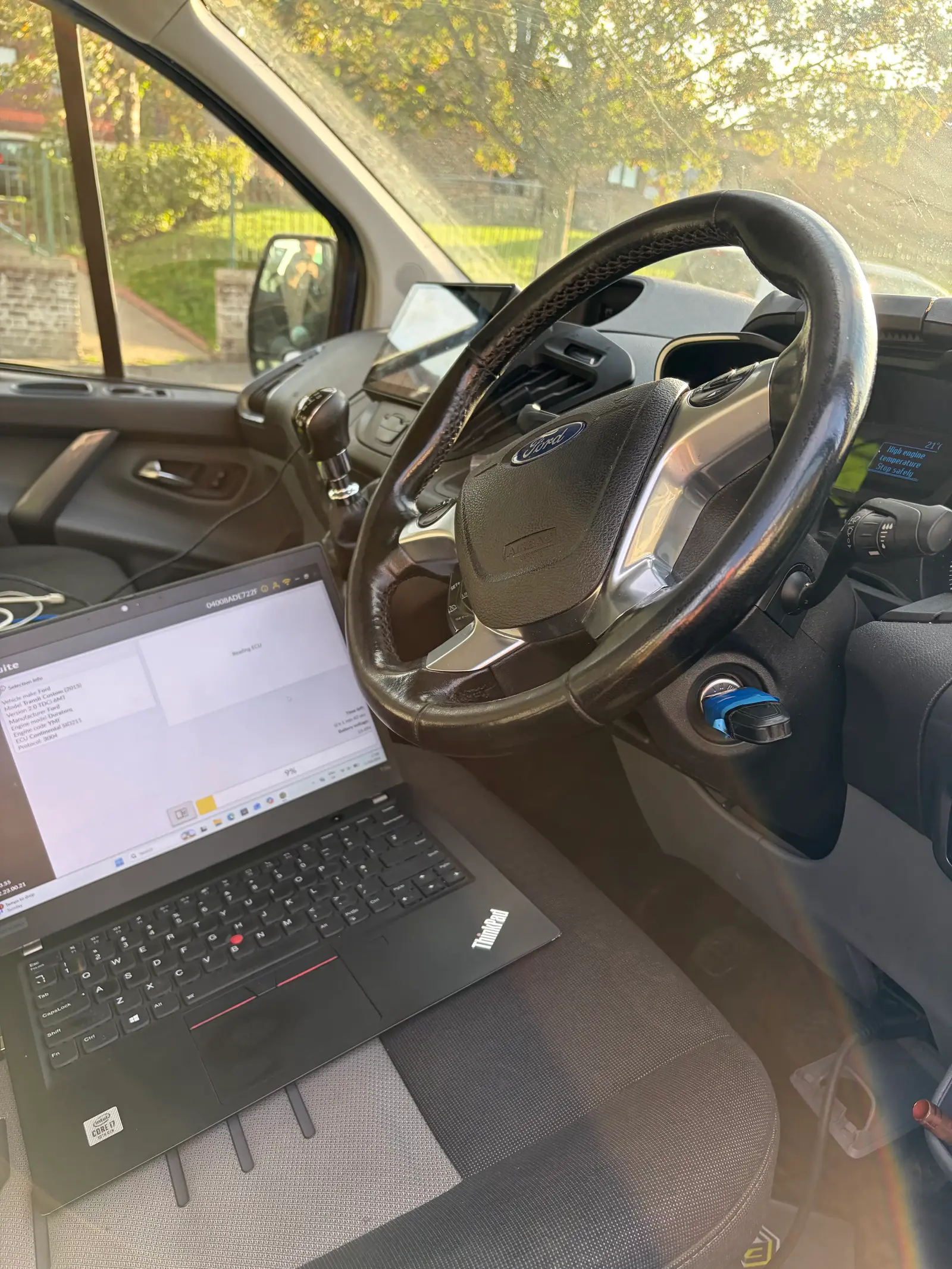
A diagnostic scan reads fault information stored by the vehicle's electronic control unit. The results can point towards a system or operating condition, but a fault code does not always prove that the named component has failed. A sensor-related code, for instance, may be caused by the sensor, its wiring, a connection, or another problem affecting the reading.
That is why diagnosis should involve more than reading a code and replacing the part mentioned on screen. A technician can assess the fault information alongside live data, the vehicle's symptoms and relevant checks. Depending on the issue, this may help distinguish an electrical fault from a mechanical one, or identify whether the vehicle's calibration is responding correctly to the signals it receives.
Avoid repeatedly clearing the warning or disconnecting the battery before the fault has been investigated. Doing so may remove useful diagnostic information without fixing the underlying issue. If the light goes out by itself but returns, the fault still needs attention.
06
Engine Management Light Diagnosis Before Any Remap
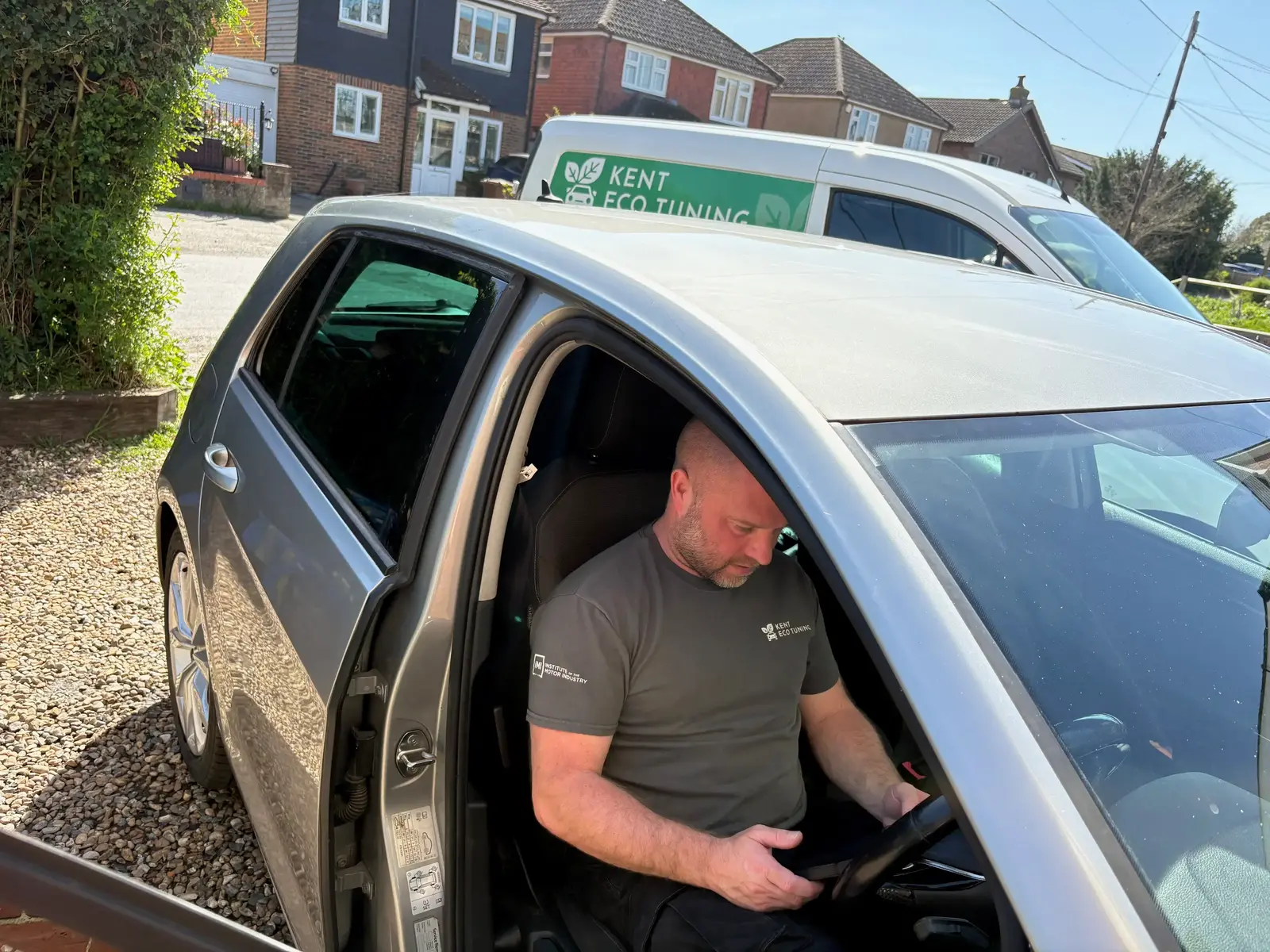
At Kent Eco Tuning, diagnostics come before any discussion about a remap. A remap changes the engine's software calibration; it is not a substitute for diagnosing a fault or repairing a mechanical problem. Tuning a vehicle with an unresolved issue can make drivability worse or place additional strain on components.
A diagnostic and health check looks at the information recorded by the vehicle and helps establish what needs investigating next. Where the cause requires mechanical repair, the vehicle may need attention from a suitable repair workshop before any tuning is considered. The fault should be understood and dealt with first; software changes should never be used to hide an unresolved warning.
Kent Eco Tuning provides mobile diagnostics across Medway and Kent. Find out more about our diagnostics and health checks or see the areas we cover.
07
Could the Engine Management Light Affect an MOT?
For vehicles covered by the relevant MOT checks, an engine malfunction indicator lamp that remains on to indicate a fault can be recorded as a major defect. The exact inspection requirements depend on the vehicle. Read the current GOV.UK MOT inspection guidance for details. Do not rely on clearing the light shortly before an MOT. The cause may remain, and the warning may return. Have the fault assessed and repaired appropriately, then confirm the vehicle is operating correctly. For Kia owners, see the Kia remapping page.
08
Get the Fault Checked Across Kent
If the engine management light has come on, make a note of whether it is steady or flashing and what the vehicle is doing. Avoid hard driving, stop if symptoms make the car unsafe, and arrange a diagnostic check rather than guessing or replacing parts at random.
Kent Eco Tuning offers mobile diagnostics across Medway and Kent, with clear advice about what the findings mean and whether further mechanical work is needed. Call 07946 854971 or visit www.kentecotuning.co.uk to get in touch.
For Jeep vehicles, see the Jeep remapping page.
MINI owners will find the MINI remapping page useful.