
01
What a gearbox remap changes
The TCU manages how an automatic transmission selects gears and coordinates shifts. Depending on the vehicle, its calibration can influence shift scheduling, shift response, torque limits, clutch control and, on a conventional automatic, torque-converter behaviour.
A transmission remap adjusts supported parameters in that control strategy. It does not add gears, change gear ratios or increase the physical capacity of the clutches. The aim is to make the gearbox’s behaviour better suited to the vehicle and the driver’s needs.
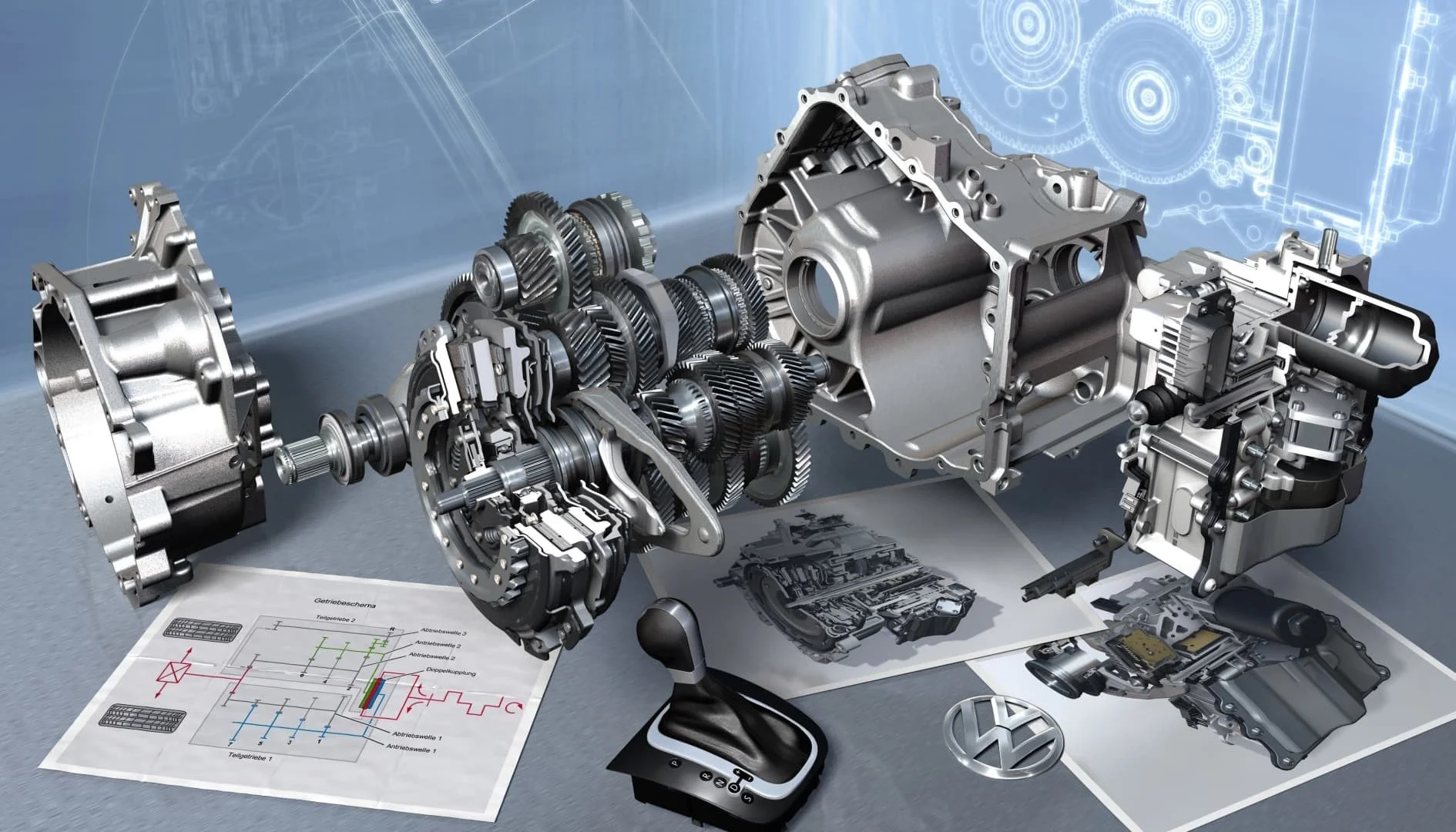
A DSG is a dual-clutch transmission: two clutches work together to prepare and deliver gear changes. A ZF automatic, such as a ZF eight-speed, is a different design, using a torque converter and electro-hydraulic control. The systems are not interchangeable, and their calibrations are not the same.
02
DSG remap for faster, more considered shifts
Many DSG owners look for quicker gear changes and a more direct response when accelerating. A suitable TCU calibration can adjust shift timing and the way the gearbox responds to throttle load, drive mode and manual inputs. Where supported, it may also revise torque limits and the engine torque requests coordinated during a shift.
“Faster” does not mean every shift should happen as quickly or as late as possible. The useful shift point depends on the engine’s power delivery, the gearbox variant and the situation. A calibration intended for spirited driving may prioritise a different response from one designed to feel composed in everyday traffic.
The DSG also has to manage its clutches during low-speed manoeuvres. Calibration changes may improve how the car responds when pulling away or moving slowly, but low-speed smoothness depends on the gearbox’s condition and the vehicle’s control strategy. A software change is not a remedy for judder, clutch wear or an existing fault.
03
ZF automatic remap for smoother response
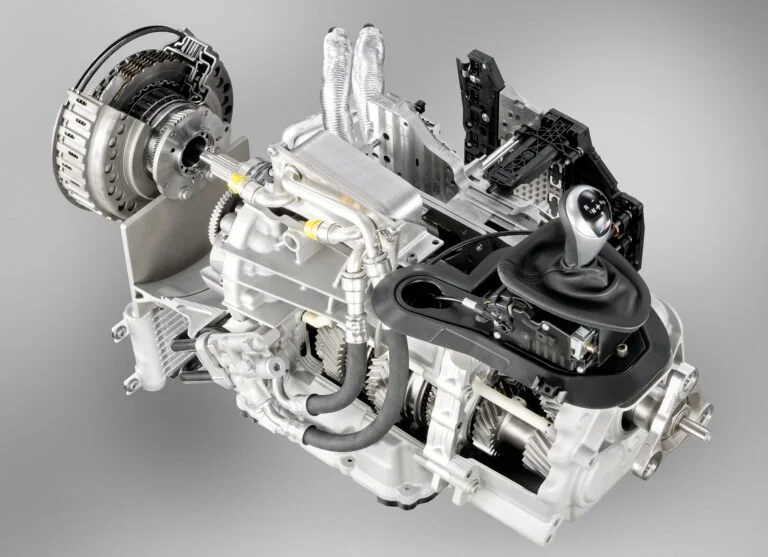
ZF automatics are torque-converter gearboxes, not DSG dual-clutch units. Their control systems coordinate gear selection and hydraulic operation, and may also manage converter lock-up. A ZF gearbox remap can adjust supported shift behaviour and the relationship between engine torque requests and transmission response.
For some drivers, the goal is a more decisive shift under acceleration. Others want a less hesitant or more settled response in normal driving. The appropriate calibration depends on the exact ZF unit, vehicle software and intended use; one ZF eight-speed is not automatically equivalent to another.
A ZF remap does not change the transmission’s hardware or make a worn component healthy. A software change cannot make a worn mechatronic component healthy again; diagnosis comes before any calibration.
04
Engine remap and gearbox remap: working together
The engine ECU and transmission TCU exchange information, including information about engine torque. When an engine remap changes how much torque is available, the gearbox calibration may still be working to its original torque limits. Depending on the vehicle, this can lead to torque intervention or make the transmission’s response feel less consistent with the engine calibration.
A compatible TCU remap can revise supported torque limits and shift behaviour so the engine and gearbox work together more coherently. Raising a software limit does not increase the gearbox’s physical torque capacity. The transmission must be identified and assessed before deciding whether a calibration is appropriate.
That assessment matters for a daily driver seeking smoother response as much as it does for an enthusiast seeking more assertive shifts. Tradespeople and van operators should also consider how their vehicle is used: frequent stop-start work, heavier loads and towing place different demands on a transmission than routine commuting.
05
Gearbox symptoms need diagnosis first
A software remap is not a fix for a mechanical or maintenance problem. If a gearbox is slipping, flaring between gears, juddering, engaging harshly or showing a warning, changing its calibration without identifying the cause may leave the underlying fault unresolved. Continued driving with clutch slip can generate heat and accelerate wear, potentially leading to expensive damage. Unexpected transmission behaviour can also affect the driver’s ability to predict how the vehicle will respond.
A health check should therefore come before tuning. It helps establish whether the gearbox is operating correctly and whether a calibration is suitable. Existing faults, fluid or servicing concerns, and the transmission’s software version all matter. Systems therefore need to be maintained properly; symptoms should not simply be tuned out.
06
What to expect from mobile gearbox tuning in Kent
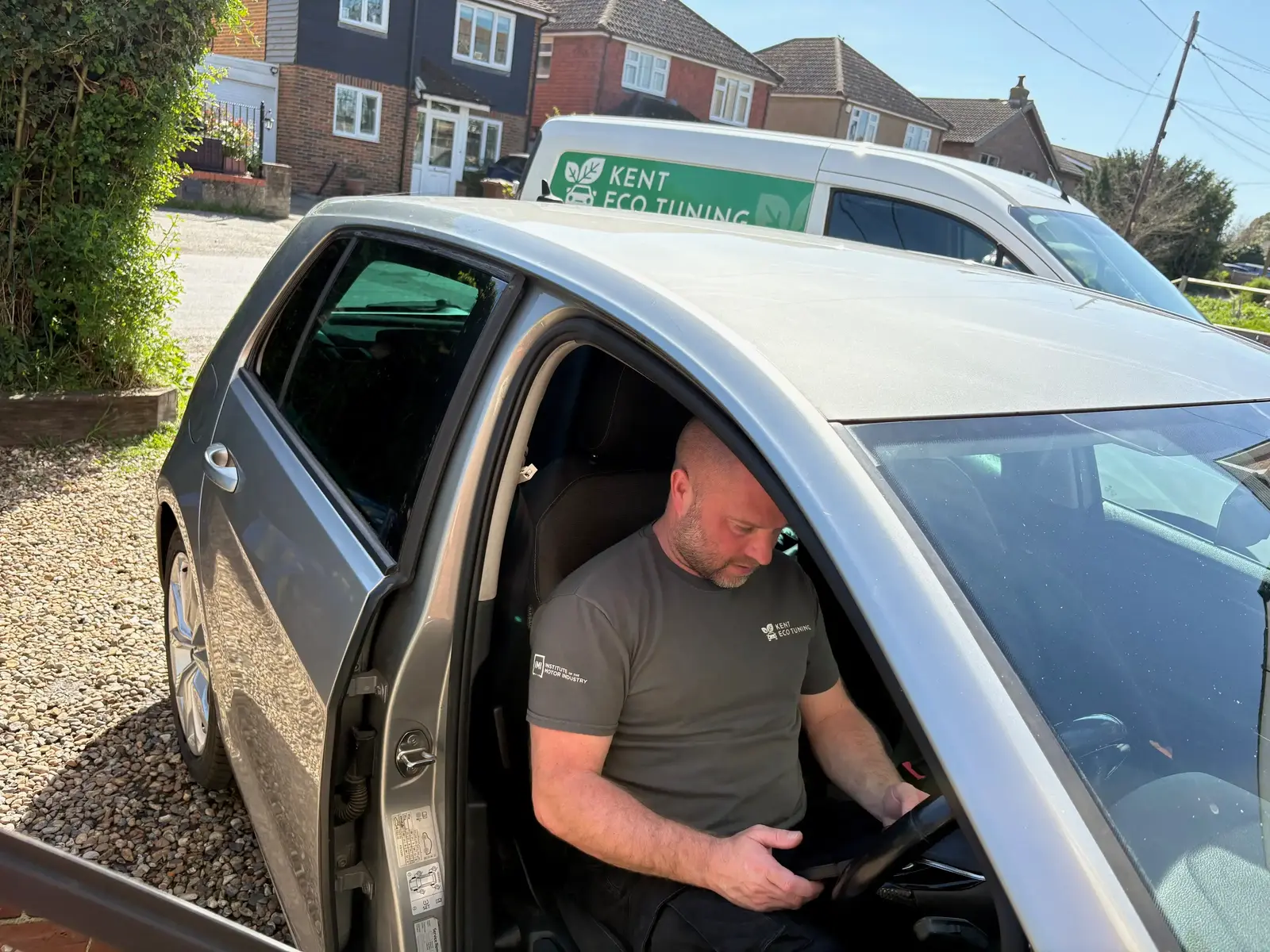
Kent Eco Tuning provides mobile tuning across Kent and Medway. The process begins by confirming the vehicle, engine and transmission details. The gearbox is then checked for suitability, and the proposed calibration is considered against the driver’s priorities, such as shift response, smoother everyday behaviour or compatibility with an engine remap.
Access and available adjustments vary by vehicle. Where a TCU calibration is supported, changes are specific to that transmission and software; there is no single file or setting that suits every DSG or ZF automatic. The vehicle’s behaviour should be checked after the work, and any concerns should be discussed rather than ignored.
Explore the gearbox tuning service in Kent, or read about ECU remapping and software solutions. To discuss a vehicle, contact Kent Eco Tuning via the website contact page or call 07946 854971.
A transmission remap cannot guarantee a particular shift feel or make a gearbox more capable than its hardware allows. Suitability and results depend on the vehicle, gearbox variant, software and mechanical condition. Owners should also check their insurer’s requirements before modifying a vehicle.