01
Towing torque: smoother response under load
A trailer adds weight and aerodynamic drag. On a climb or when joining faster traffic, the engine has to work harder to maintain speed. The driver may need more throttle, while an automatic gearbox can change down repeatedly as it tries to find the right ratio.
An appropriate torque-biased tune can improve the engine’s response through the useful rev range. Depending on the vehicle and gearbox, that may help it hold a suitable gear more consistently and reduce the need for repeated downshifts. The aim is smooth, progressive delivery, not a sudden surge of power.
However, additional torque does not remove the need to drive correctly. Do not labour the engine in a high gear at very low RPM. If the vehicle struggles on a gradient, select a lower gear and keep the engine operating comfortably. A remap should support sensible driving, not encourage excessive throttle or make an unsuitable vehicle seem capable of carrying more.
02
Caravan remap: power, economy or balance?
There is no single ideal calibration for every driver. The best option depends on what you tow, how often you tow and what you want the vehicle to do.
- Power-focused tuning prioritises a sharper response and stronger acceleration. This may suit drivers seeking a more engaging everyday drive, but it is not automatically the best choice for regular towing.
- Economy-focused tuning aims to make efficient use of torque during steady driving. Real-world results depend on vehicle condition, load, route and driving style.
- Torque-biased tuning focuses on usable pulling response, with delivery tailored to the vehicle and its intended work.
03
Towing remap and fuel economy: realistic expectations
More torque can make it easier to maintain momentum without pressing the accelerator as hard, but a remap cannot guarantee lower fuel use while towing. The trailer’s weight and shape, road gradients, speed, traffic, tyre pressures and driving style all have a significant effect. Using the extra performance for harder acceleration or faster driving may increase consumption instead.
An eco-focused remap typically returns a realistic improvement of around 8-10%, and on some vehicles you can expect more than that. What it returns on yours depends on the vehicle and how it is driven. This is not a guaranteed saving for towing journeys: carrying a caravan or trailer increases the work the vehicle must do, so fuel economy will vary with the load and route.
04
Protect the engine and drivetrain
Towing puts sustained demand on more than the engine. The clutch, dual-mass flywheel, gearbox, turbocharger, cooling system and emissions equipment all need to be in suitable condition. If any of these already has a fault, additional torque may expose the problem sooner or make it worse.
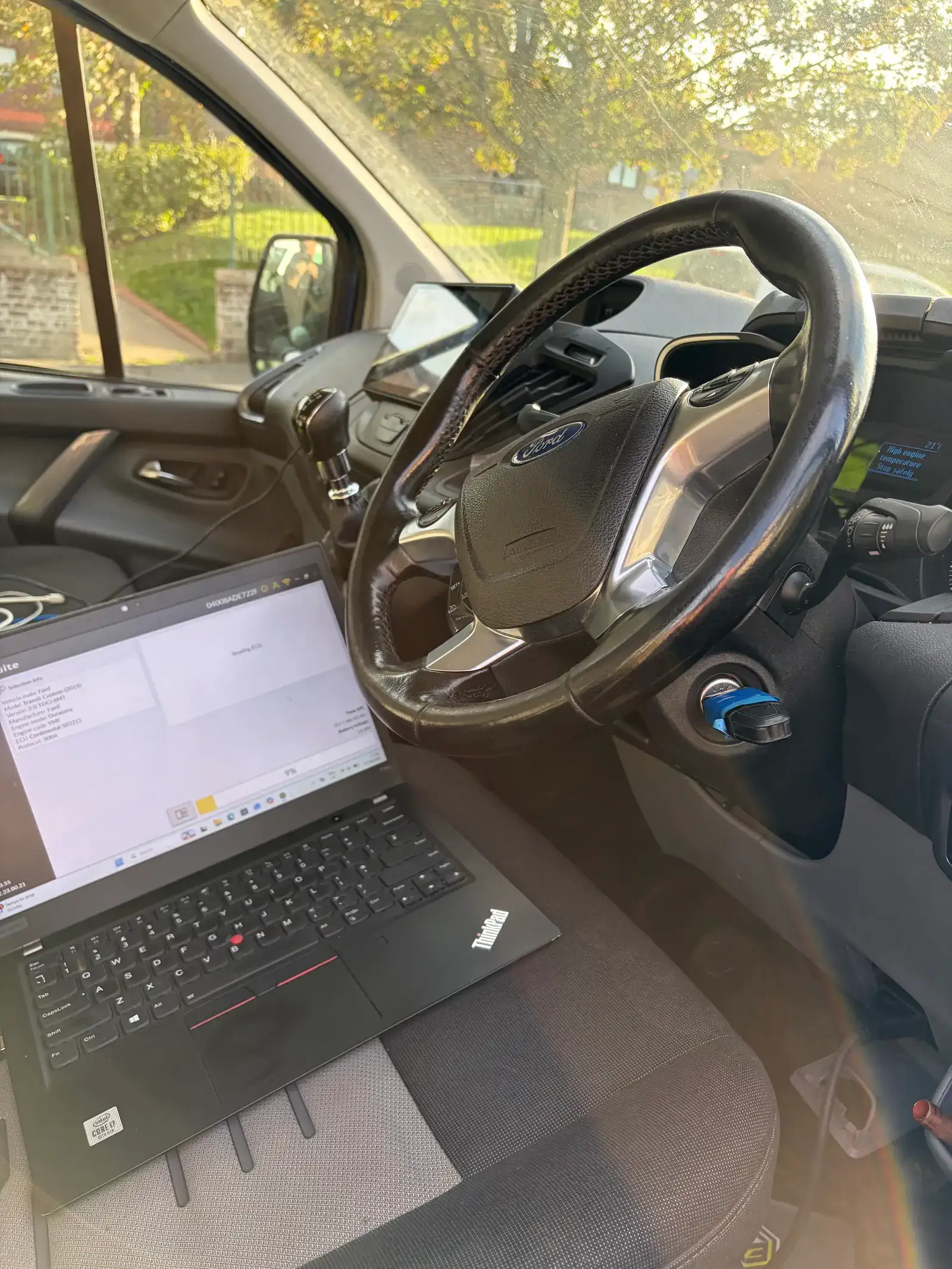
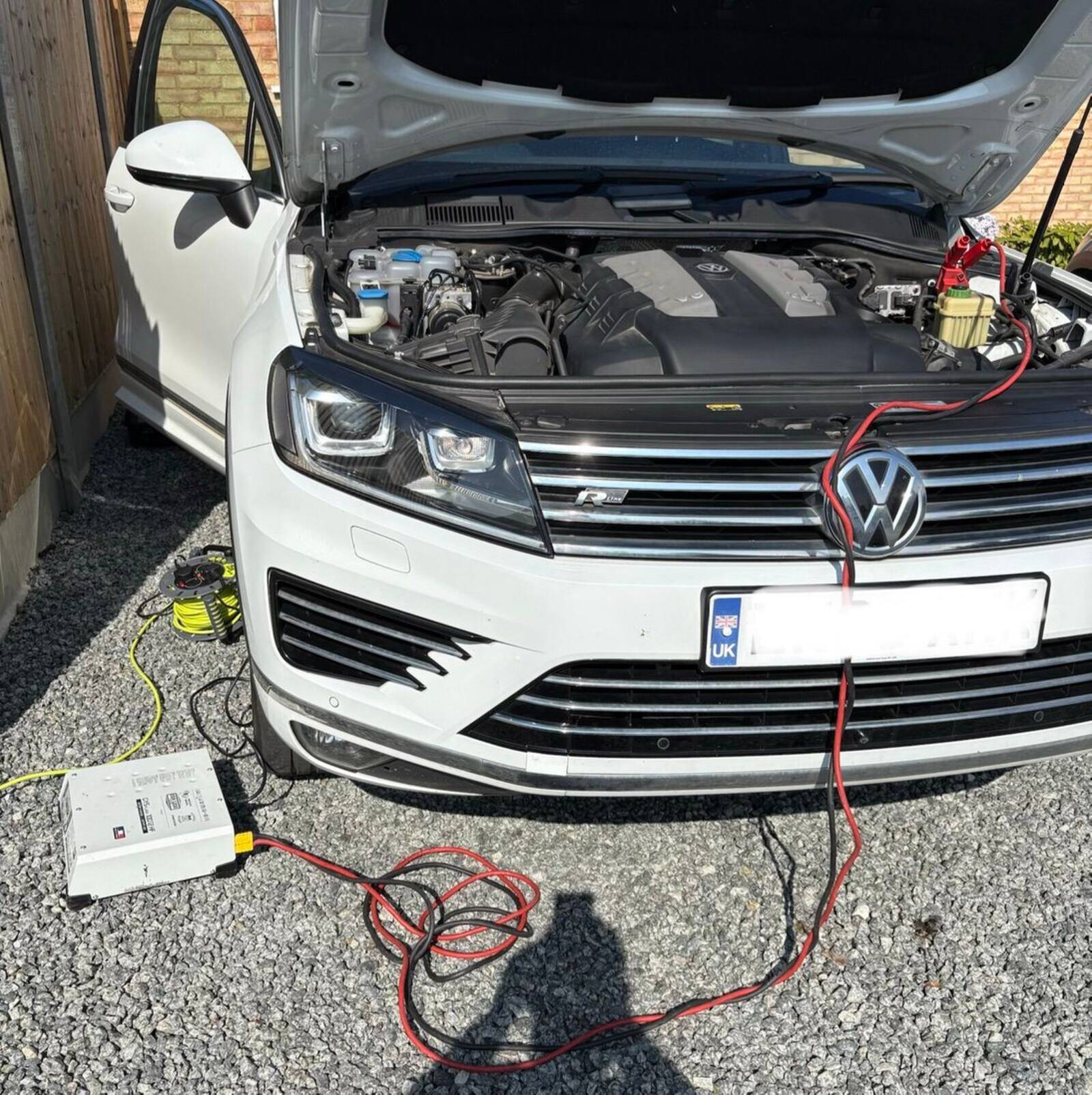
That is why a responsible towing remap begins with checks, not assumptions. Kent Eco Tuning carries out diagnostics and a vehicle health check before tuning. If a fault is present, it should be investigated and resolved before software changes are considered. A remap is not a repair for a worn clutch, an overheating issue or an existing engine fault.
The calibration also needs to respect the limits of the vehicle’s components and retain appropriate operating protections. A high peak torque figure may sound impressive, but smooth delivery and a suitable torque curve matter more for a vehicle that regularly tows. Where the vehicle has an automatic transmission, its behaviour and condition should also be considered.
05
Towing limits: a remap does not change them
A software calibration does not increase the vehicle’s legal towing capacity. It does not change the maximum permitted train weight, axle limits, tow-ball limit or the trailer weight stated by the manufacturer. Always check the vehicle handbook and identification plate, and make sure the loaded vehicle and trailer remain within their limits.
The UK government’s guidance explains how to check towing weight and width limits. Its trailer and caravan safety-check guidance also covers essential checks, including the coupling, tyres, lights, load and weight limits. Follow the guidance for your vehicle and trailer before setting off.
You should also tell your insurer about any engine software modification and confirm cover before the vehicle is used. If the vehicle is under warranty, leased or used for frequent heavy towing, check the relevant terms with the manufacturer, finance provider or warranty provider first. Their requirements can differ.
06
Mobile towing remap service across Kent and Medway
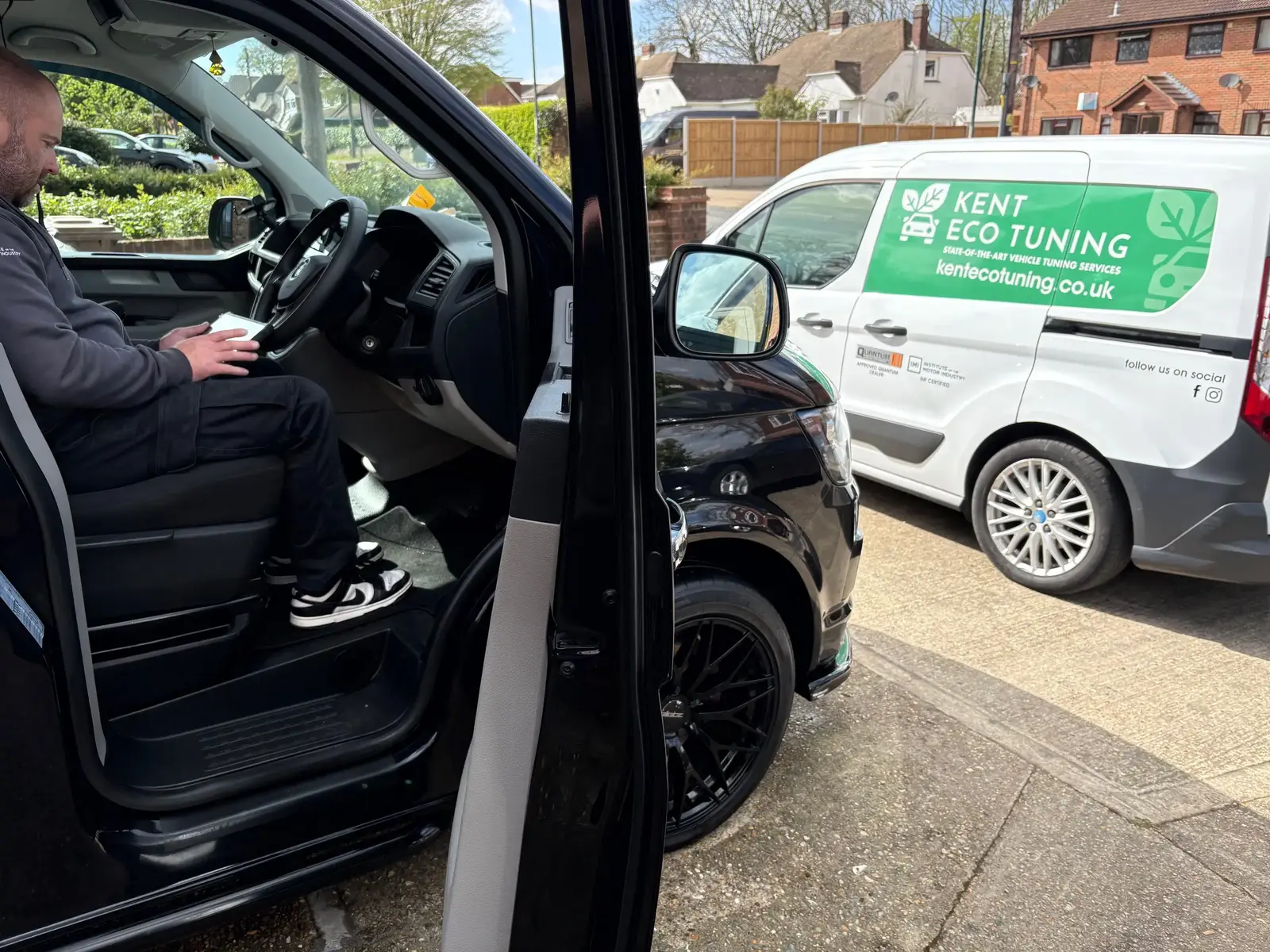
Kent Eco Tuning provides a fully insured mobile service across Kent and Medway, subject to vehicle suitability and access. We start by discussing the vehicle, its condition and how it is used. A health check and diagnostic assessment help establish whether tuning is appropriate; if it is, the calibration can be tailored towards everyday drivability, economy or towing torque.
Tradespeople who tow tools or equipment can also explore our van and fleet remapping service. For service coverage, see our mobile remapping areas across Kent and Medway.
07
Is a towing remap right for your vehicle?
A towing-focused calibration may improve the way a suitable, healthy vehicle responds under load. It is not a substitute for correct loading, safe driving, regular maintenance or compliance with towing limits. The best next step is to share your vehicle details and explain what you tow, how often you tow and what you want to improve. Our team can then provide honest advice on whether a remap is suitable.
For advice or to arrange a vehicle health check, visit the Kent Eco Tuning contact page or call 07946 854971.