
01
Check the specialist\'s credentials and insurance
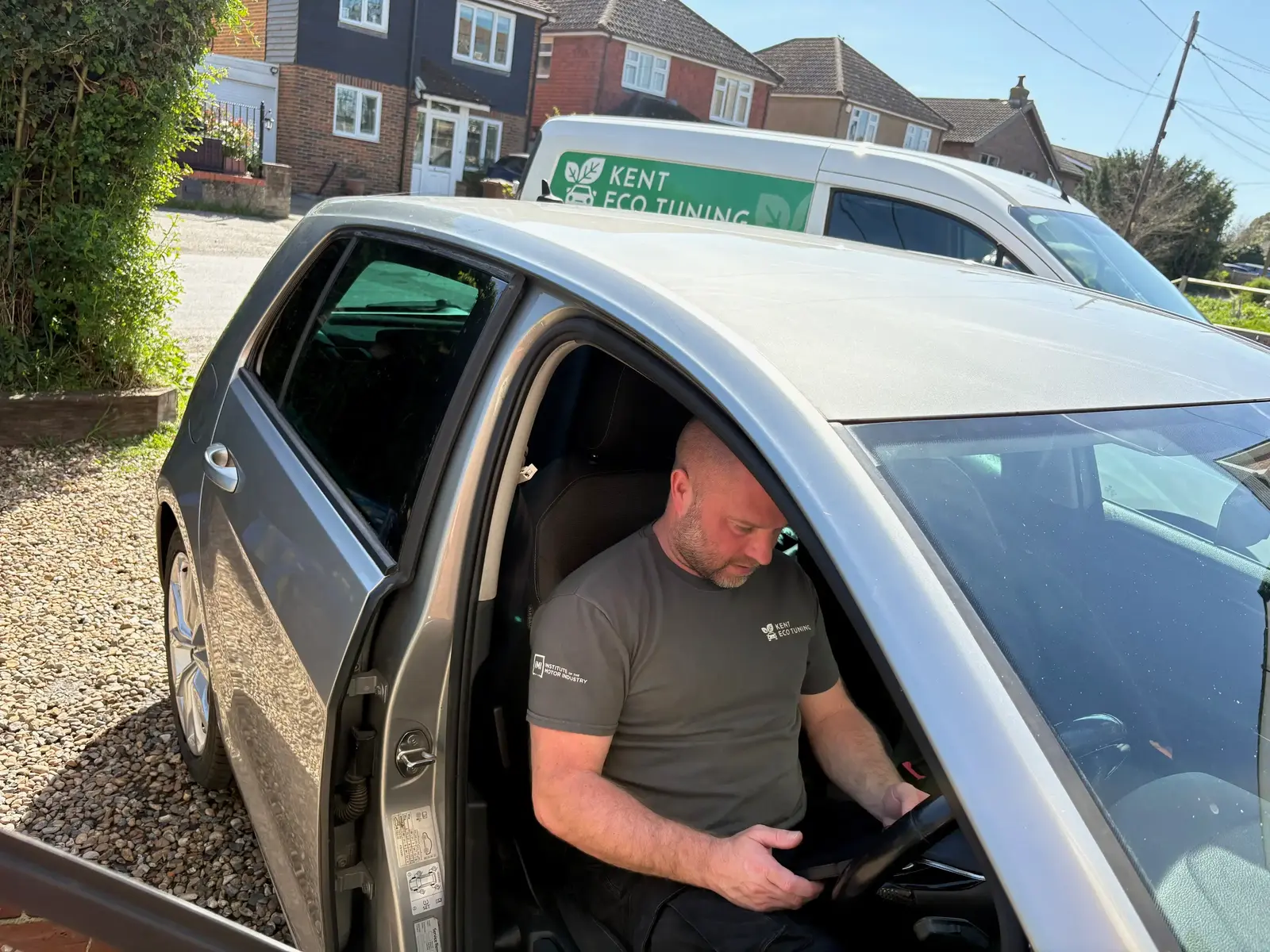
A professional business should be clear about who will attend, what experience they have with your vehicle and what insurance applies to the work. Ask for the technician's name and relevant training. If they state that they hold an Institute of the Motor Industry (IMI) certification, ask what the certification covers and how you can verify it. A certificate is a useful credential to check, but it does not replace good diagnostics, sound judgement or a suitable calibration.
Ask the business to explain its insurance cover in plain terms. Find out whether the work is covered, what the policy does and does not include, and whether you can receive written confirmation. Do not assume that a tuner's insurance automatically covers your vehicle against every mechanical failure. A remap is not a replacement for a mechanical warranty.
A credible specialist will answer these questions without pressure. They should also provide clear terms and an invoice that identifies the work carried out. If you cannot establish who is responsible for the service or how to contact them afterwards, pause before booking.
02
Put diagnostics before the tune
A tune cannot repair a mechanical fault. If an engine already has a boost leak, a fuel-delivery problem, a failing sensor or a drivetrain issue, changing its calibration may expose or worsen the problem. The consequence can be poor running, additional wear or an expensive repair that could have been identified first.
Ask what the specialist checks before writing software. A sensible diagnostic-first process may include a scan for stored and pending fault codes, a review of relevant live data, and a conversation about warning lights, symptoms, maintenance history and previous modifications. Checks should be appropriate to the vehicle and the concerns it presents; no scan alone can guarantee that every mechanical issue has been ruled out.
Most importantly, ask what happens if a problem is found. A responsible specialist should explain the finding and recommend resolving relevant faults before tuning proceeds. Be cautious if you are told that warning lights do not matter, or that a tune will fix an unrelated mechanical problem.
For more detail, see our diagnostics and vehicle health checks and our guide to whether ECU remapping is safe in Kent.
03
Ask how the calibration is tailored
A vehicle's engine, gearbox, condition and intended use all affect what calibration is appropriate. A daily driver that needs smoother response has a different brief from a van regularly carrying tools or towing. Ask how the specialist will account for your priorities, and whether the proposed tune is designed around power, economy or a practical balance between the two.
A useful answer should describe the trade-offs. A power-focused calibration prioritises stronger response and performance. An economy-focused approach aims to support efficient operation in suitable driving conditions, but fuel use still depends on the vehicle, route, load and driver. A balanced tune may prioritise usable torque and smoother drivability rather than chasing a headline figure.
Ask whether the calibration preserves the vehicle's necessary safety strategies and how expected results are assessed. Claims should be realistic and vehicle-specific, not a guaranteed outcome or a large figure offered without inspecting the car. For more on these choices, read our guide to power versus economy in a Stage One remap.
04
Understand the mobile process
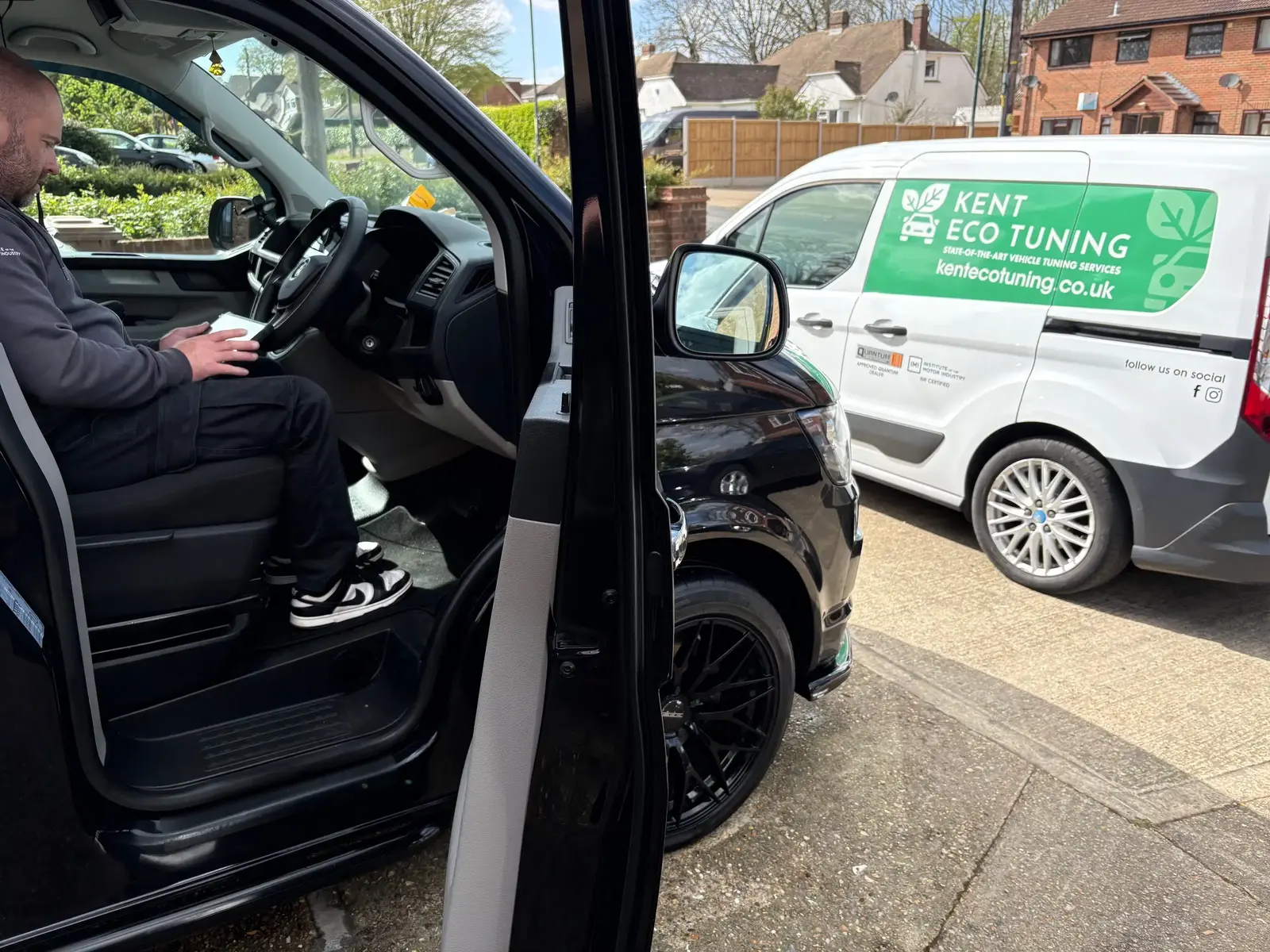
Mobile work can be convenient, but location alone does not tell you whether the process is suitable. Ask what equipment and safeguards the specialist brings, how they maintain stable battery voltage during programming and what they will do if the vehicle's ECU requires a different method.
Before booking, clarify the expected sequence: vehicle and fault checks, discussion of your goals, software read and backup, the agreed calibration, and appropriate checks afterwards. Ask whether the original software is retained and what support is available if you have a concern later.
Some vehicles may require a bench-based process or a different arrangement. A knowledgeable specialist should explain this before the appointment rather than improvising on the day. Our article on mobile remapping versus workshop tuning in Kent explains why the method should suit the vehicle and the job, not simply the location.
05
Get clear answers about aftercare
Before agreeing to work, ask what documentation you will receive and who to contact if the vehicle behaves differently afterwards. Find out what the business does if a fault appears during pre-checks, programming cannot be completed, or the results do not match the agreed brief.
Also ask what the tune does not cover. A software change cannot guarantee the condition of a clutch, turbocharger, gearbox, emissions system or other worn component. Existing wear can become more noticeable when driving habits or engine load change. Systems therefore need to be maintained properly, and concerns should be discussed before work starts.
Keep the invoice and any vehicle-specific information supplied with it. Check your insurer's requirements before booking, and tell them about the planned modification. Insurers' rules differ, so confirm directly with your own provider and keep its response. AXA and LV both provide guidance on declaring vehicle modifications: AXA's car modification advice and LV's information about modifications.
06
Recognise the red flags
Walk away, or at least stop to ask more questions, if a provider:
- Offers a tune without asking about your vehicle's condition, warning lights or intended use. - Promises a fixed result before checking the vehicle and its specification. - Cannot explain the diagnostic, programming or backup process in terms you understand. - Dismisses existing faults or pressures you to proceed despite concerns. - Is vague about insurance, written terms, aftercare or who is responsible for the work. - Suggests removing or defeating emissions equipment as a fix for a fault.
A physically blocked DPF needs repair, not a software change. Removing or defeating emissions equipment can cause an MOT failure. Ask for a lawful diagnostic and repair route rather than accepting a software shortcut.
07
Do not judge by the cheapest quote alone
A lower quote can be tempting, but it is not necessarily the lower-cost decision if the service skips checks, provides no clear aftercare or leaves you uncertain about what has been installed. Compare what is included: diagnostics, the suitability assessment, the calibration approach, documentation and support.
The right specialist should be comfortable saying that a vehicle is not ready for a tune. That advice may mean resolving a fault first, or deciding that a particular calibration is not suitable for the vehicle's use. A refusal in those circumstances can protect your vehicle and help you avoid spending on work that cannot address the underlying problem.
For everyday drivers, the priority may be smoother response and more confidence in normal traffic. For tradespeople, it may be usable torque and sensible running costs across a working week. A good specialist will listen to both briefs and explain the balance between power, economy and efficiency without making promises.
08
Your buyer\'s checklist
Before you book, make sure you can answer these questions:
- Who will carry out the work, and what relevant training or experience do they have? - What insurance applies to the service, and can the specialist explain its limits? - What diagnostics and vehicle-health checks happen before tuning? - Will the work be postponed if an unresolved fault makes tuning unsuitable? - How will the calibration reflect your vehicle and your driving or work requirements? - How are the original software and programming safeguards handled? - What checks, documentation and aftercare follow the appointment? - Have you told your insurer and confirmed its requirements?
If any answer is unclear, ask again. You should understand the process and its limitations before giving approval.
Kent Eco Tuning provides a fully insured mobile service across Medway and Kent, with diagnostics and honest advice before tuning is considered. To discuss your vehicle or ask whether a tune is suitable, contact us through the website or call 07946 854971.
For further information, browse our guides and services, visit the site sitemap, or read our Privacy Policy and Terms and Conditions.
09
MG Remapping FAQs
10
Are mobile remaps as safe as workshop work?
When the correct programming method is used and the vehicle checks out, yes. The method depends on the ECU, and a good specialist explains which approach suits your car.
11
Should the cheapest quote win?
Not automatically. Compare what is included: diagnostics, the assessment, the calibration approach, documentation and aftercare.
12
Do I have to tell my insurer?
Yes. Insurers have different rules about modifications, so confirm directly with yours and keep their response.
For Skoda models, see the Skoda remapping page.