
01
Why this engine takes to a calibration so well
A 2.0 TFSI with a single turbocharger has a broad, usable band of boost. The engine is designed to run lean and efficient at light load and rich under demand, and the software decides where those transitions happen.
That gives a tuner real room to work with. The result owners describe is rarely about a peak figure. It is about the car feeling awake when the pedal is pressed a little, and about the pull staying strong past the point where the standard map starts to ease off.
On the 8J, the difference is felt most on a B road where you are in and out of the throttle. On the 8S, it shows up on a dual carriageway overtake, where the car gathers speed with less of a wait.
02
Quattro and the gearbox question
TTS cars came with quattro all wheel drive, and the way that system puts power down flatters a tuned engine. Grip arrives early, so the extra urge is not wasted on a spinning front tyre.
The gearbox is a separate question. What was fitted varies by year and model, and we confirm it from the registration before booking.
Owners who find the shifts hesitant at low speed ask about gearbox tuning, which examines shift behaviour rather than output. Discuss it as its own job, separate from any engine work.
03
Known points we look at first
The 2.0 TFSI has a few well known wear items that matter before any calibration. The diverter valve can split and bleed boost away. Carbon build-up on the intake valves affects direct injection engines over time, and the earlier 8J cars have more miles behind them now.
None of that is caused by tuning. All of it limits what tuning can achieve, and a file written over a boost leak will feel strong once and disappointing the next day.
Fault codes get read from every module and the engine is logged under load. The intake and boost pipework are inspected, the oil and filter history is checked, and whatever map is currently installed gets pulled off and looked at. TTS cars that have been mapped before are not unusual, and software with no clear history is safer replaced by the factory version than built upon. There is more on the process at our diagnostic health checks page.
04
On the day itself
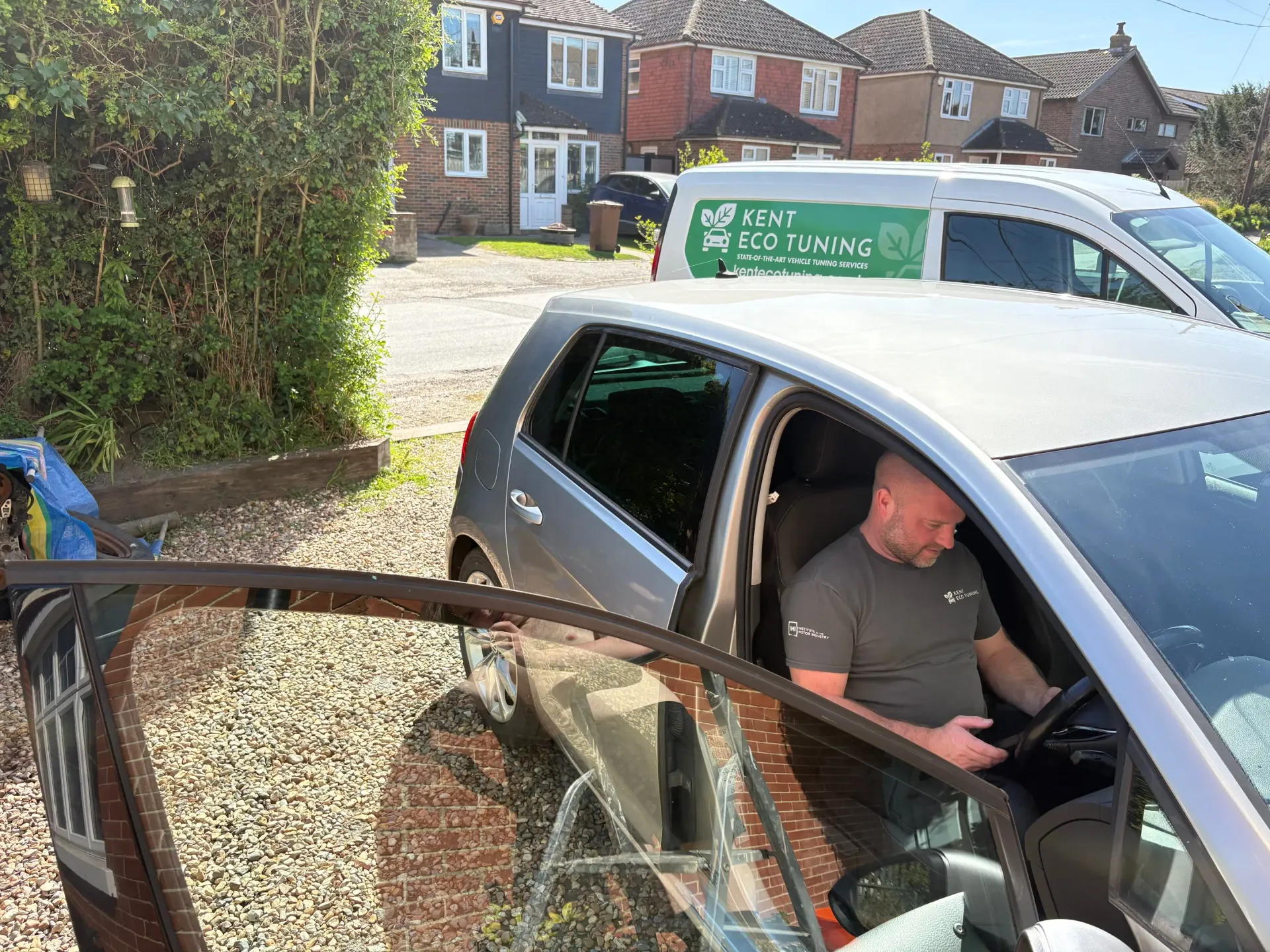
We come to you, park up alongside, and the car stays with you throughout. There is nothing to arrange beyond a flat place to work.
The original file is read and stored. Then the calibration is prepared around how you use the car, whether that is a daily commute, weekend blasts, or a mix with occasional track days. It is written back, followed by a road test and a second data log so we can confirm the engine is behaving as intended.
Expect to be without the car for a couple of hours rather than a day.
05
What the two cars feel like from the driver's seat
The 8J feels smaller than it is. The steering tells you what the front tyres are doing, the ride is firm enough to remind you what surface you are on, and the cabin is not a quiet place at speed. Owners who love them love them for exactly that.
The 8S is the more grown up car. It covers ground faster without making a fuss, and the extra composure means the speed arrives without drama. That difference matters when we talk about what you want from a calibration, because the two cars flatter different driving.
On the earlier car, a sharper throttle transforms how it feels on a good B road. On the later one, the benefit is more about how easily it dispatches a long journey.
06
Track use and heat
A TTS is often bought as a second car and taken on track days, and that changes the advice. Sustained hard use puts far more heat through the engine and the transmission than a road drive ever will.
If track work is on your list, tell us at the start. The calibration can be written to hold up under continuous load rather than for a single quick burst. Real world economy is the other direction entirely, and the power versus economy guide explains what shifts when you choose one over the other.
07
Next step
Ring 07946 854971, or send the details over using the contact form. The wider range sits at Audi remapping Kent, and the sharper RS cars are on the RS3 page if you are comparing models. What happens at your address is described on our mobile remapping page.
08
TTS tuning questions
09
Is the 8S different from the 8J to tune?
The engine is closely related, the surrounding car is not. Cooling, gearbox behaviour and how the car puts power down all differ, so the file is built for the car in front of us.
10
Does quattro make a difference?
It does. With drive going to all four wheels, the extra pull is used rather than lost, and the car feels more settled under hard acceleration.
11
Can I have economy rather than power?
Yes. It is a different calibration, aimed at part throttle efficiency rather than maximum effort.
12
What if someone has already tuned it?
We read it and assess it. If it is poor or untraceable, the honest answer is to start again from factory software.