
01
The FN2, and what naturally aspirated means here
The FN2 is the odd one out. No turbocharger, no boost control, no intercooler. The engine makes its power by breathing hard at high revs, and the calibration work is about ignition, fuelling and the variable valve timing rather than pressure.
What that means in practice is a modest set of changes that sharpen the way the engine responds and cleans up the fuelling at the top end. It will not transform a naturally aspirated car into something it is not, and anyone promising otherwise is selling something.
These cars are also old enough now that maintenance history matters more than the software. Valve clearances, the state of the intake, oil consumption and the condition of the exhaust are all worth knowing before we begin.
02
The turbo cars, FK2 and FK8
The FK2 brought the turbo and a huge change in character. The FK8 refined it, added more sophisticated suspension and became the car that set lap records people still talk about.
Both use a 2.0 VTEC Turbo, and both respond to a calibration because Honda left room in the standard software. The difference is felt in the mid range, where the car gathers speed with noticeably less effort. It also shows in the way the throttle answers when you are working through a corner and want a small adjustment rather than a shove.
Where these cars differ is heat management. The FK8 in particular runs warm on track, and the intercooler and radiator are working hard long before the engine is. A calibration aimed at repeated hard laps has to account for that.
03
The FL5
The current car is the most complete Type R yet, and it is also the one where owners ask the most careful questions, because they have usually read a great deal before calling.
The engine is closely related to the FK8 unit but the surrounding car is different, with a wider track, revised cooling and a different calibration from the factory. We treat it as its own job rather than assuming the FK8 approach transfers.
04
Cooling, clutch and the limits that matter
On track, the limiting factors on a Type R are rarely the engine internals. They are heat and the clutch.
Coolant and intake temperatures climb quickly under sustained load, and once the ECU sees temperatures it does not like, it protects the engine by reducing output. That is correct behaviour, not a fault. A calibration that ignores it will simply trigger the protection sooner on a hot day.
The clutch takes a hard life in these cars, particularly on tuned examples used for track days. If it is already slipping, more software makes it worse, not better.
So before anything is written, fault codes come out of every module and the car is driven while temperatures and boost behaviour are logged. The pipework, the intake and the intercooler are checked by eye for debris or damage, the service record is read, and any existing map is pulled off and examined. Where a car carries a poor earlier file, that is a reason to begin again from the standard software rather than build on it.
Our diagnostic health checks page explains what that visit covers.
05
How the appointment goes
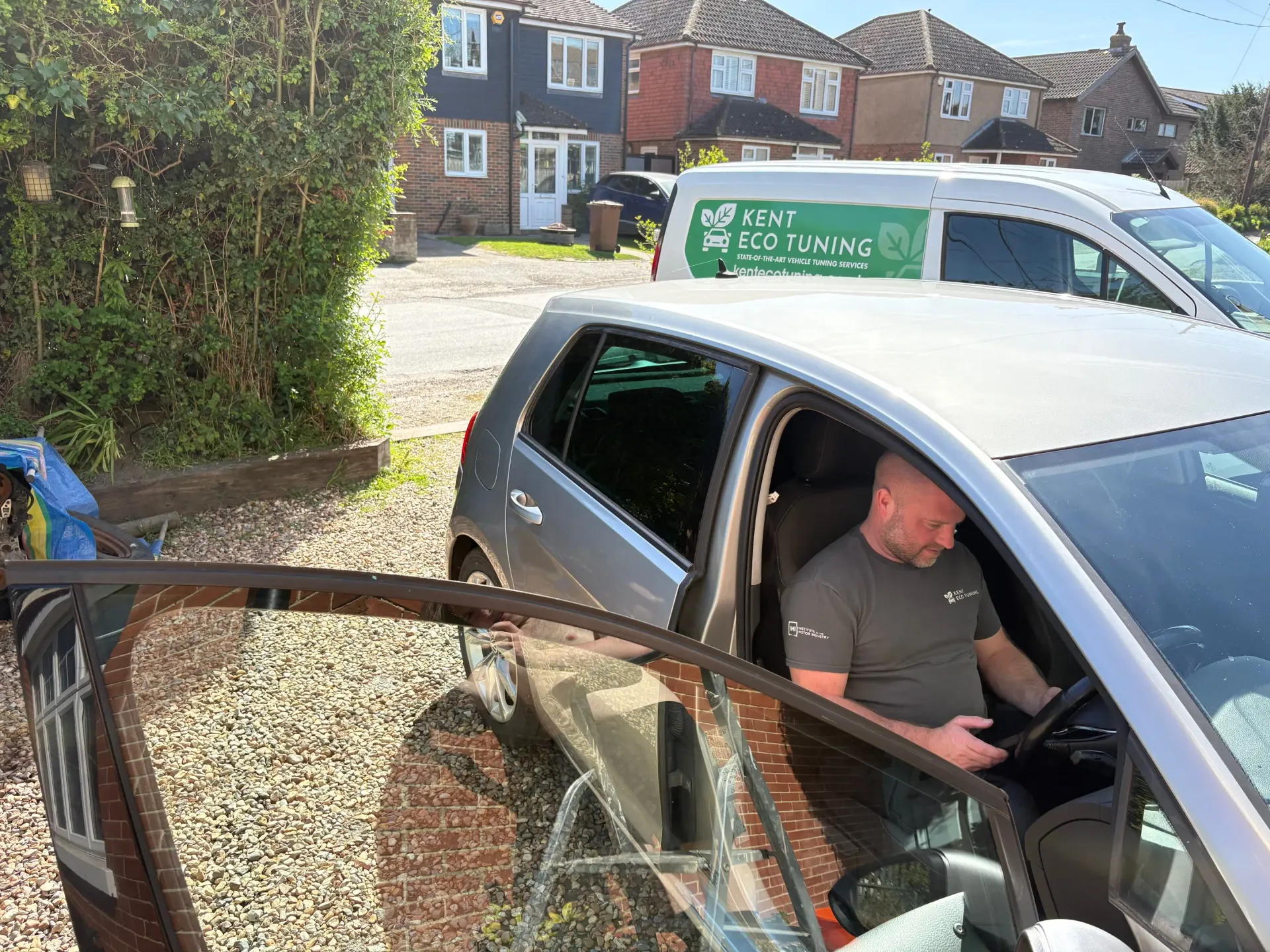
The car stays with you. We travel to where it is parked: a drive in Rochester, a street in Gillingham, a car park in Maidstone or a house out near Ashford.
Copying the standard file comes first and it is kept safe. The calibration is then prepared around your use, whether the car is a daily, a weekend toy, a track car or a mixture. It is written back, road tested, and then logged once more.
If track work is on the schedule, say so early. The file can be written for repeatable performance rather than one quick burst, and that changes the priorities. How the two ends of the scale differ is set out on our power versus economy page.
06
Tyres, brakes and the parts that keep up
A Type R is quick enough that the parts around the engine are doing serious work. Tyres that have gone hard with age will let go earlier than the driver expects, and brake fluid that has absorbed moisture will fade on a downhill run long before the pads give up.
None of that is our department, but it belongs in the same conversation. A car that has just been calibrated will be used harder than it was before, and the consumables need to be up to it.
If the tyres are near the limit, we will say so rather than hand back a faster car on tired rubber.
07
Get the car booked in
Ring 07946 854971, or send the details through the contact form with the registration to hand. Other Honda models are collected at Honda remapping Kent. Whether a standard car can take a calibration safely is dealt with on the safety page.
08
Type R tuning questions
09
Which Type R do I have?
The FN2 is the naturally aspirated car. FK2, FK8 and FL5 all use the 2.0 VTEC Turbo and are handled individually.
10
Is the FN2 worth tuning?
It is worth a modest calibration if the engine is healthy. Nobody should expect turbo car results from it.
11
Why does heat matter so much?
Because the ECU reduces output when temperatures climb, so a file that ignores cooling will simply trigger that protection earlier.
12
Can the clutch handle more?
That depends on the condition of the clutch in your car. If it is already slipping, it needs replacing before any calibration.
13
Related models
Owners often compare this with Honda Jazz, Honda Civic and Honda CR-V, and each has its own page covering the engines and what the calibration changes.