
01
Why these cars are handled differently
The engineering in a Ferrari V8 is not fundamentally mysterious, but the margin for a careless file is smaller and the cost of getting it wrong is higher. Engines are built to close tolerances, run high cylinder pressures, and manage heat with systems that assume the calibration is doing its job properly. A file that shifts protection limits out of the way to find a figure is not a tune. It is a way of shortening the life of an expensive engine.
That is the standard being applied here. Torque limiters, thermal protection, knock control and the fuelling models stay active and stay honest. What changes is the mapping in the areas the driver actually uses, and only within what the hardware is comfortable with.
02
The V8 models, in general terms
Ferrari's V8 cars divide roughly into two eras, and the distinction matters more than any individual model name. The earlier cars are naturally aspirated, and the later ones are turbocharged, and the amount of headroom in the calibration is very different between them.
A naturally aspirated engine is already close to what it can give, so the honest scope is in the delivery: sharper response, a cleaner pickup from low speed, and a throttle that feels more connected to what the engine is doing. A turbocharged car has more room, and the work is about how the boost arrives and how the torque is spread, not about chasing a peak.
Rather than printing a list of models and implying every one is supported, the specific car is checked. Two cars with the same badge can carry different engine management depending on the market and the year, and the only reliable way to know is to look.
03
Coverage before commitment
Equipment coverage for a marque like this is nothing like as wide as it is for a common hatchback, and pretending otherwise wastes everybody's time. The sequence is therefore fixed. The registration and the vehicle details come in first, the variant and whatever management system it runs are established, and the answer arrives before any date is offered.
Where a car falls outside what the equipment covers, that is said plainly and the conversation ends there. No file is improvised, and nothing goes onto the car that could not be explained later. It is a short process and it protects the car.
04
What the inspection covers
The diagnostic scan comes first and produces a record of the car as it stands: fault codes across the control units, live data under load, and the behaviour of the systems that protect the engine. On a car that is driven sparingly, that record is often the most useful thing a new owner gets out of the visit.
Then the physical checks. Oil condition and history, coolant, the state of the turbochargers where the car has them, the clutch or transmission depending on the model, and the obvious consumables. Tyres and brakes are looked at because a car that cannot put its power down cleanly tells you nothing useful during a road test.
Anything found is reported as a finding, not as a sales pitch. Some owners want the car left alone once they hear it, and that is a perfectly good outcome. The general approach is explained in our notes on whether remapping is safe, alongside the health check page.
05
Previous work and aftermarket parts
Cars at this level frequently arrive with history. An aftermarket exhaust, a different intake, a file from a previous owner, a tuning box fitted by somebody who has since moved on. All of it is identified before any calibration is written.
A previous file is read and examined rather than overwritten, and a box comes off. If the earlier work is sound it becomes useful information about the car. If it is not, the car goes back to a standard file first and the new work starts from there. Building on top of an unknown map is how problems get inherited by the next owner.
06
The transmission and the rest of the driveline
Ferrari's transmissions vary by model and by generation, and the answer for a specific car comes from the vehicle rather than from a general rule. What applies across the range is that the torque ceiling set by the gearbox is never exceeded, and shift quality is compared on the road both before and after.
The calibration does not change how the gearbox is serviced, and it does not alter the intervals. The wider subject is covered on the transmission tuning page.
07
How the visit runs
08
Can every Ferrari V8 be tuned?
No. Coverage depends on the model, the year and the engine management system, and it is confirmed against the specific car before a booking. Some are supported and some are not.
09
Will a tune compromise reliability?
The calibration keeps the engine's protection strategies intact and stays inside the limits the hardware was built around. Beyond that, a car that has been maintained properly will always be a better candidate than one that has not, which is what the inspection is for.
10
Do you need the car for several days?
No. A single car is normally completed in one visit once the coverage is confirmed. Anything that needs parts becomes a separate conversation before the engine work is considered.
11
Is the work done at my home?
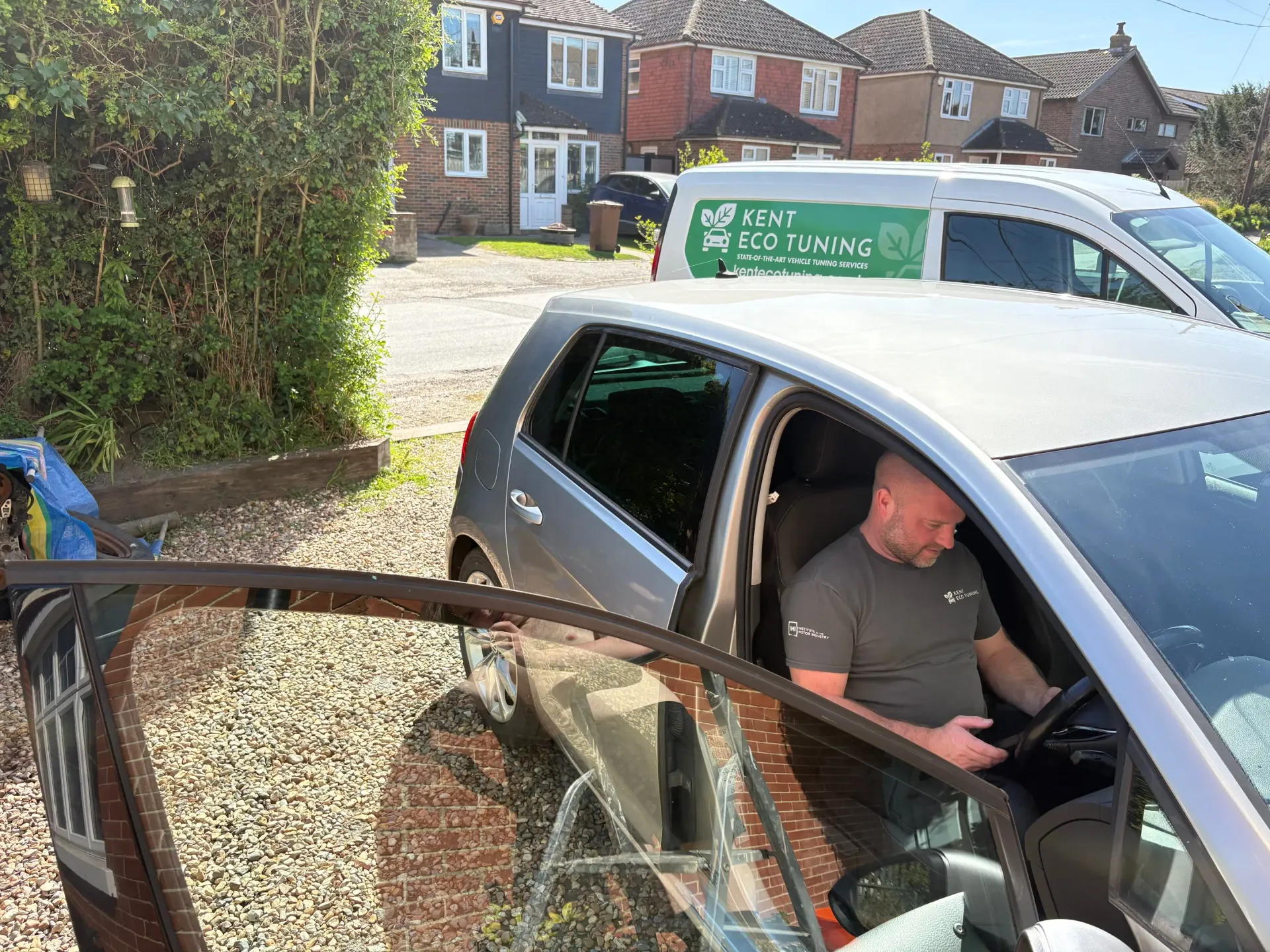
Yes, at the address where the car is kept, anywhere in Kent and into Essex within normal reach. There is no collection or drop off service. Call 07946 854971 to discuss a specific car, or leave the details on the contact page. Model, registration and known history make the reply worth reading.