
01
An older car needs an older car's checks
A car of this age is a different proposition from a new one. Pipework has had time to harden, the cooling system has had time to silt, and the turbo has collected wear that nobody has ever measured.
None of that makes these cars a bad idea. It means the read before the tune does more work. Requested boost is compared with measured boost, intake temperatures are logged, and the car is driven properly rather than revved on a driveway. The electrical side gets the same treatment, because an ageing Italian hatchback develops earth faults and tired batteries that throw codes worth understanding before they are dismissed.
Where something turns up it gets explained before anything is written. Very often the car wants a service and a fresh set of hoses before any file goes near it, and the tuning follows once the engine is breathing properly.
The 500C soft top is welcome on this page too. It carries a little more weight than the tin roof and it has a fabric hood that ages, so the roof is checked for operation and for sealing before any money goes on engine work. A hood that leaks turns into damp carpets, and damp carpets turn into electrical faults that cost more than the tune.
02
The parts a tune cannot help with
Owners often book a tuning session hoping it will cure something else. A clutch that shudders, a knock from the front suspension, a set of tyres past their best or a mount that has gone soft. Software cannot touch any of those, and the car will still feel tired afterwards.
On these cars the clutch is the usual suspect. A worn release bearing or a slipping friction plate shows up as a strange noise or a reluctance to pull, and a sharper file makes both more obvious rather than less.
Suspension bushes and top mounts are the second. A short wheelbase car with tired bushes wanders over uneven ground, and no calibration will settle that. Where any of it is found, the honest recommendation is to fix it first and come back.
03
Narrowing down which version you own
The fast 500 was built over a long stretch of time, and the specification moved with it. More than one version of the 1.4 went into these cars and more than one gearbox was offered, so the combination in yours decides how a tune is approached.
Owners sometimes find that their car does not match what the logbook or the bonnet suggests, usually because it arrived from another market or was registered during a changeover. That is not something to sort out before booking, it is simply why the registration is the first question asked.
Cars built for other markets wore a Fiat badge instead of a Scorpion, and their history and paperwork raise questions worth asking before any work is quoted.
04
The engine, and the software already inside it
The 1.4 turbo in these cars is a sturdy unit that has been tuned in enormous numbers, and it responds well when the basics are right. Those basics are oil, filter and the state of the boost control system.
Some versions of the family use a hydraulic intake and some do not, and the difference matters. Where the hydraulic system is fitted the oil is doing two jobs, and the actuator that runs it is a known wear item. Rough idle, a stumble from cold or an intermittent warning lamp are the signs, and software will not solve any of them.
Compression is worth measuring on a car this old. A tired engine accepts a file and then feels flat, and the owner blames the map. Establishing the baseline first is fairer on everyone.
Few of these cars are standard. A previous keeper may have fitted a box, a different intake, an exhaust or a map flashed in a car park. All of it shapes what happens next.
Whatever is in the car now gets read first. A tuning box is removed and its wiring checked once it is clear. An existing file is examined for the shortcuts that make a car feel quick for a week and rough afterwards. Where that work is poor, starting again from a known standard base is the right answer rather than layering on top. The original software is always saved, so there is a clean route back.
05
What the car feels like afterwards
The standard car has a lag before the boost arrives, a strong shove, then an upper range that gives up early. The tunable part is the gap and the fade, and both improve.
After a careful calibration the car picks up from lower down and holds on for longer. In traffic it becomes easier to drive gently, which matters in a short wheelbase car with a light flywheel. On a good road it feels more willing without feeling frantic.
It will not become a different class of car. It will feel like a better sorted version of the one you bought, which is the honest aim. Our diagnostic health checks page covers the testing side, and the core ECU remapping page explains what calibration involves.
A tune on a small hot hatch is not a fuel saving measure, whatever a sticker on a box may suggest. Some owners do see slightly lower consumption on a steady run because the car needs less throttle, but that is not a reason to book.
The reason to book is that the car is more pleasant to drive and gives you more of what you paid for in the first place. If you want to know how the two goals balance, power versus economy sets it out without hype. The rest of the Italian marques are gathered under Alfa Romeo and Abarth remapping.
Insurance should be told. An IMI certified technician carries out the work and the business holds full insurance, and the car remains yours to declare as you see fit.
06
Arranging the visit
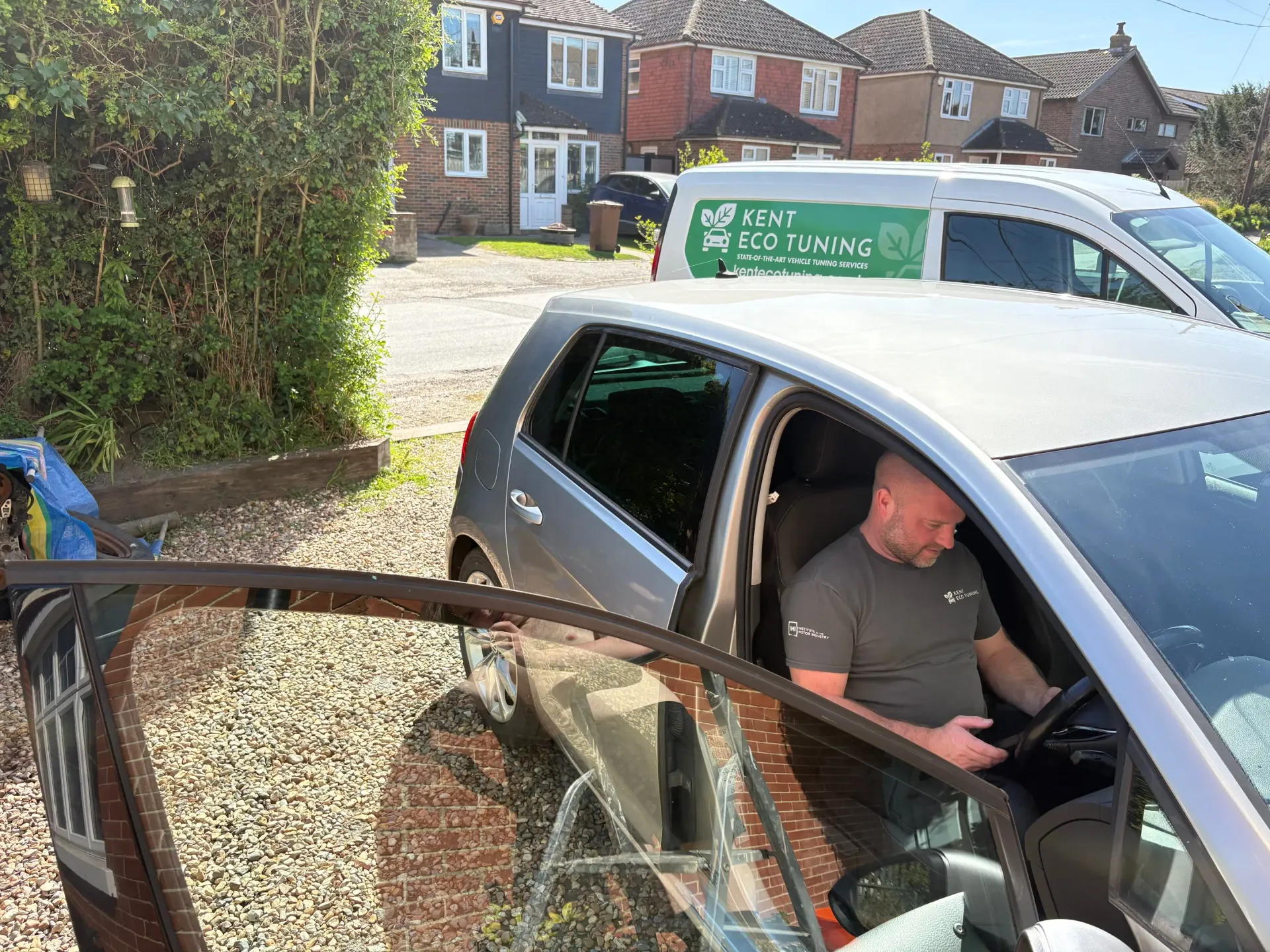
Nothing moves: the work happens on your drive. Pass on the plate, the model year from the logbook and a sentence on your usage. Calling 07946 854971 is the quickest route, and the contact form reaches the same inbox.
07
Questions about the earlier 500
08
My logbook says Fiat, not Abarth. Is that a problem?
Not at all. These cars were registered during a brand change and the paperwork varies. The registration is what gets checked, and the car is treated on what it actually is.
09
Is a high mileage example worth the money?
Sometimes yes and sometimes no, and the read decides. A well maintained car with plenty of miles is often a better starting point than a low mileage one that has sat about.
10
Can you remove a tuning box on the day?
That is normally part of the visit. The box comes off, the wiring is checked, and the car runs its own software before anything new goes in.
11
Related models
Owners often compare this with Abarth 124 Spider and Abarth 595, and each has its own page covering the engines and what the calibration changes.